Quantum Computing Is Closer Than You Think | Tal David, Quantum Art
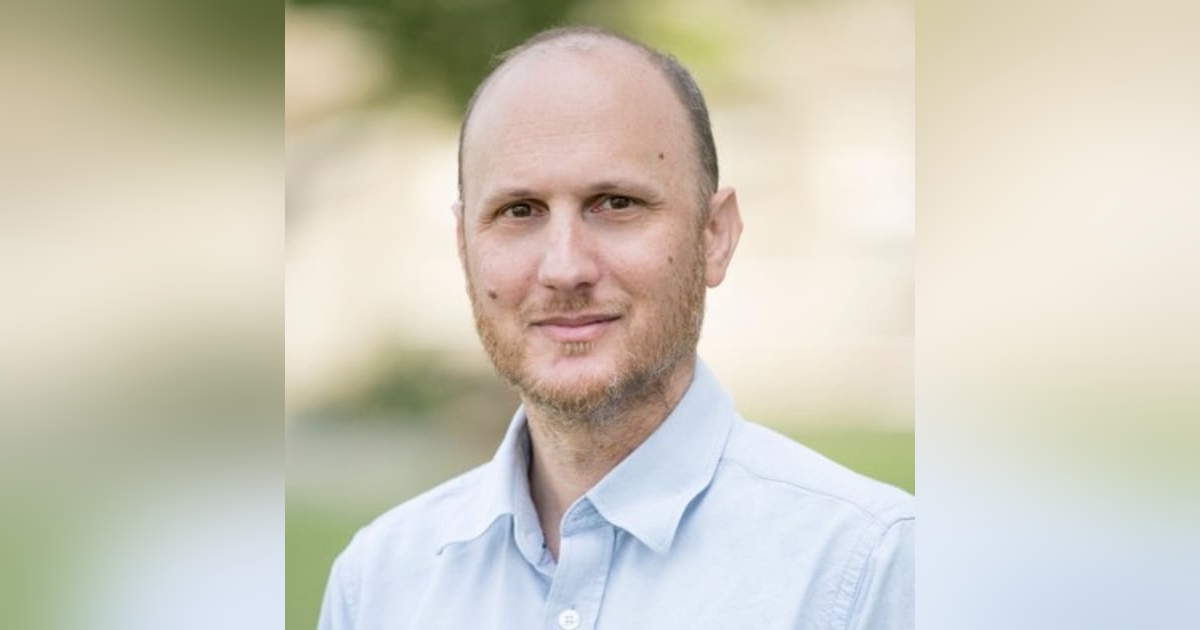
In this episode of hot-in-tech, hosts David Leichner and Yitzy Tannenbaum interview Tal David, CEO of Quantum Art, a pioneering quantum computing company that recently raised $100 million in a Series A round. Tal shares his background in quantum physics, government-led innovation, and applied research, and discusses how quantum computing is evolving from academic theory into practical applications. The conversation explores the rapid progress in the field, the growing interest from investors, and what it will take to reach true quantum advantage.
speaker-0: Flip the switch.
speaker-1: Hit connect.
speaker-0: it up.
speaker-1: Hi, I'm Yitzy Tenenbaum.
speaker-2: And I'm David Leishner and this is Heart in Te-
speaker-1: Conversations with people shaping what's next. Here we go.
speaker-2: Hello everybody and welcome to a new episode of Hot in Tech. Today we have with us Tal David, is the chief executive officer of Quantum Art, a quantum computing company focused on building full stack quantum systems. He brings deep experience across quantum physics, government led innovation and applied R &D, bridging fundamental science with real world deployment. Prior to Quantum Art, Tal served as head of the Israel National Quantum Initiative. a joint national program spanning academia, defense, and industry with a scope exceeding $400 million. Earlier in his career, he held research and leadership roles at Israel Aerospace Industries and worked as a physicist and consultant in quantum science and technology. Tal holds a PhD in quantum physics from Ben-Gurion University of the Negev and undergraduate and graduate degrees in physics from Tel Aviv University. And I can tell you, he is way smarter than I am. Tal, welcome to the show.
speaker-0: Hi David, thanks for having me.
speaker-1: So Tal, that was a very interesting intro about you. It seems like you touched on quantum both in academia, in government, and now in the private sector. I'm wondering what your perspective is on kind of moving the world of quantum from the theoretical academia to the practical private sector, the real world. Talk about that transition.
speaker-0: Yeah. So I think it's a matter of maturity of â the industry and also of me as a person, right? You start by going to the lab and tweaking and moving all of the knobs. And then you get interested with higher level stuff like processes and policy and driving real big change â where we live and how we establish an ecosystem and the industry. And then you say, okay, now I want to do it and build the best technology with my own hands and create a new company that will go front row center in the world. So I think that â my personal path went along those lines. And also if you take a broader look at the quantum industry, it went along these lines. started from deep scientific abstract notions that nobody ever thought would become real practical technology. to understanding that, there is a potential to do that, and then establishing frameworks and getting investors interested in that. And now it's the time to bring all of these things together and really go to scale and show that these things can actually work.
speaker-2: Maybe you can just share with us when you decided that you wanted to go into quantum physics.
speaker-0: Yeah, well, I'm not sure I ever decided. I always was interested in physics and understanding how the world operates. And when I got out of the army, my girlfriend, who's been my wife for more than 20 years now, told me, if you want to go ahead and study physics, study it. Even though it was not clear that you can do something with this profession at the time. And so I went into physics and then when I finished my master's, I wanted to go and do something really at the forefront in my PhD. And I looked, I opened all of the physics groups in Israel and I searched for the one that was most exciting. And I found this group that, you know, uses lasers to manipulate individual atoms. And this was wild, right? So I thought, okay, I'm going to spend a few years of my life understanding how this thing works. And while doing that and understanding how it really operates, was becoming more more evident that you can actually do something useful from this. And from there, I went to the industry and then to government and then back to industry â in my path.
speaker-1: It's interesting that quantum has been a big thing for probably 15, 20 years. Like everyone talked about it. We knew that it was there, but I feel like only in the last maybe year, it's becoming a lot more tangible and a lot more real. I'm wondering if you had like what changed recently that now it's getting so much more of the spotlight.
speaker-0: Yeah. So the notion of quantum computing was actually coined by Richard Feynman in the early eighties who said, okay, we need to solve how quantum systems behave. Let's use other quantum systems to simulate or to calculate how quantum other quantum systems behave. And then there was a lot of time of research of understanding what this thing could do. â Is it, is it, â does it have any real viability to become technology? I think that in the early 2000s, there were the first demonstrations of, â we can build the very basic building blocks of quantum algorithms out of quantum logic gates. And following a seminal work by Professor David Chor from Yale in the mid-90s that found an algorithm that can effectively â factorize large numbers into their prime factors, which is on the basis of most of the cryptography that we have today. So showing a real speed up in an actual, know, holy grail type of application. And that drove people into the field. And then after a few years, let's say in the beginning of the 2010s or so, it was becoming evident that you could build these systems. And this attracted more people into the game. And as we progressed in that decade, more more investments. in the early 2020s, there was a... clear indication that this really can go to practical industry. And then a lot of money got poured in. So now you have â like â a coalescence of the technology becoming mature, the applications becoming clearer and clearer, a lot of government backing, a lot of private investment â effort, and all of these things go together. And it really feels, and I'm not the only one that is saying it, that we are at an inflection point. Right before the, know, the chat GPT moment of quantum computing, if you like it, not in the mass consumer aspect, but in the viability of the technology and commercial sense of the word.
speaker-2: And you yourself recently completed a round of financing, which was not a small one. And I think that shows also what you said about the funds coming into this area.
speaker-0: Yeah, definitely. Quantum Art was founded in 2022. We did our seed round back then as a single seed round. That was the largest ever in quantum space. And now we announced our series A round, which was announced at 100, but it's going to be more than 110. Again, one of the largest one in the industry.
speaker-2: That's incredible, incredible.
speaker-0: Thank you. The incredible is the team doing the actual work, not the management that is trying to bring money in. And I can tell you two things on the one hand, it's an impressive number, but it's in a very, very challenging competitive market with a lot of smart people. They're heavily, heavily funded and we have a lot to do in order to become leaders in the field. And this is why we went to build a sizable team and to go as fast as possible to prove our technology. Secondly, can tell you â raising money is not easy, certainly not in the geopolitical â situation today. â And so I think that it has amazing â significance of the vote of confidence that we got from investors and we have investors from Israel, all of our seed investors continued. We have an amazing lead investor, Bedford Ridge Capital from New York. We have other investors from Australia, Israel, Europe, and North America. And we have an outstanding structure, I think, that can take this company all the way to the frontline version.
speaker-2: Absolutely. And I think â from the amount of investment that we've seen pouring into Israel over the last few years, â there's a lot of respect for the technology that is coming out of a very small country.
speaker-0: For sure. This is relevant for Israel and also in the sense of quantum and people don't know that or are not aware of that. The VC investments in quantum companies in Israel put Israel in number five position in the world, not per capita, in absolute number. About a billion dollars of venture capital funds invested in quantum companies. Half of that only in 2025, which is amazing.
speaker-1: And goes back to that point that we're seeing that spike in quantum investments relatively recently.
speaker-0: Yeah, 2025, there were about $10 billion of investments in private and public companies, not including internal investments in hyperscalers by themselves, like what Google has internally or IBM or Amazon, like that. That $10 billion of investments is more than the past four or five years combined. So 2025 was really, really wild. Wondering if this will keep up for the new year. Certainly we have a lot of work cut out for us.
speaker-2: You know, it's interesting, back in the 90s, I did my thesis for my MBA on why international companies are investing in Israel. one of the points that was asked in that thesis was were there personal allegiances to the country or did it have to do more with the engineering qualities and capabilities that exist in the country? And I think it's clear over the last few years that The engineering, the physics capabilities, just the startup mentality, taking all of this together is definitely the reason why international companies are investing in Israel.
speaker-0: Yeah, I agree. think that Israel has an advantage of being small. Everybody knows everybody. Everybody was in the military with the same guys and continuing to academia and to industry. And so the cycles of innovation, research and development are really, really quick, right? And you could get to fruition much faster. And in some senses, in the defense technologies, we also have the privilege of being able to test technology in the operational field very quickly. And this gives a lot of advantage. There are also challenges, right? The talent pool in Israel is more limited. The capital is more limited. The ability of the government to support is not as we would have liked because of all of the other needs of the country. But I think overall, if you look at the past few decades, Israel has shown the world that it could use its advantage of being small and stand out in the world stage in a lot of technological areas. And we feel that we are standing on the shoulders of giants. In the 1950s, There was a group of crazy people who built the first electronic computer at the Weizmann Institute of Science. That was one of the top 10 computers in the world back then. And that was just a few years after the Holocaust and when the country was just formed and people were getting food stamps, right? And these people were building the one of the top computers in the world. That computer was called the Weizsack, which is like similar to the ENIAC. in the States and when my co-founder and chief science officer, Professor Elias-Eriot Weizmann built the first Israeli quantum computer at Weizmann, he called it the Witeshack, but now with a Q at the end. And that system was the starting point for us to understand, okay, hey, this technology is mature enough for us to spin it out and commercialize it and build this company. So we feel really that we're standing on a long heritage. of know-how and expertise in innovation.
speaker-2: That's amazing. So a CEO of a full stack quantum computing company, what are most misunderstood challenges people are underestimating when it comes to building practical quantum systems? You mentioned a couple, maybe you can deep dive into that a little more.
speaker-0: Yeah, that's a wonderful question. think that the biggest misconception today is that this is far away in the future. It's no longer a question of if, it's only a question of when. And the answer is that it is within sight. If you look at the roadmaps of all of the leading companies in the world, including our roadmap, In a couple of years time, we will get to what is called quantum advantage. This is the point where quantum will surpass classical, but in meaningful commercially viable applications. Then we have a lot to go beyond that in order to unlock the full potential of quantum, but going on the playing field and doing meaningful stuff is really within sight. So that's the biggest misconception. And the message here for people who are interested in this enterprise users and so on is This is the time to get your hands dirty and understand what this will â bring to you as value. You don't want to miss that train. The other things that are difficult are the challenge in talent. There are not many people that know how to build these systems in the world. This is slowly getting better and better with governmental programs and academic programs that are pushing more people into the field. I think that â the biggest challenges are defining the killer app if there is one. So the algorithmic challenge. Building these systems at scale while they will be very stable and high performance because â demonstrating performance at small scale has been done in the past few years. This is behind us. But it's scaling this up to large systems that are needed in order to solve these commercially viable algorithms. This is the number one challenge and it all has to do with stability, stability, stability, both in hardware and software. And I think that â capital is also a big challenge. Certainly in the private market, you now have a few quantum companies being traded publicly. They're like printing money almost for free. And you have more and more companies going into the public markets. Just in the last quarter, there have been three announcements of new SPACs. that are going to be closed and start trading in the next few months. And there are a few others in the pipeline and raising capital, certainly after the seed stage in the private market is not an easy task to do. â so that is also a challenge.
speaker-2: Tell me, do you think, â or maybe I should say, how much will quantum applications affect what is happening in the world of AI today?
speaker-0: Yeah, so that's a great question. â I would say two things about this. First of all, there are market studies that show that the impacted verticals are in the trillions of dollars within the next five to 10 years. Not in the next five years, but in the next five years after that. In many application areas, including financial services and pharma and materials and logistics and security and whatnot. In terms of AI, there was a nice study that came out a couple of months ago that analyzed exactly that. What would be the impact of quantum on AI when they are working together in the next just few years before quantum will remove the training wheels and go on in itself? And that analysis showed two very, very interesting things. The first one is that in certain workloads of AI, like pattern recognition and real-time learning and optimization problems. The speed up factor could be up to a factor of a million and more in some of these AI workloads. So it's really tremendous, but not less interesting. And I think even more interesting than that is that the energy consumption would drop significantly. If you look at the energy consumption of AI data centers today, it's huge. There was â a statement by Eric Schmidt a few months ago that said that in a few years, 99 % of the energy of the planet will go to AI. I'm not sure what's that based on, but he said it. â And that analysis that I mentioned before showed that in the next five years, until the end of the decade, when quantum will start to accelerate AI, so you would â allocate some of the resources to be done on the classical platform and some of the quantum platform, the energy consumption of that combined data center will drop by hundreds of terawatt-hours of electricity. In 2030, the gap between these two lines of only classical and hybrid is on the order of the annual energy consumption of the entire UK. For a year. That's a big deal. this is while most of the calculation is still done on the classical side. Right? When we go even beyond that a decade or 15 years from now and quantum will be independent and will not need â a classical compute. The, this gap will become more and more dominant. Our quantum computer quantum art uses 20, 30 kilowatts of power. That's not much more than what you have in your apartment and home. Okay.
speaker-2: That's going to take away a huge barrier for AI just.
speaker-0: Yeah, going everywhere. You know, AI is a real revolution. It's really disruptive, but it's basically a software revolution. It is built on the standard CPUs and GPUs and now a little bit TPUs that we know for many years. While quantum is first and foremost a hardware revolution. So everything that you have in software will be added on that amazing disruption that quantum will bring. Having said that, should be said that quantum is not the go-to technology for any applications. If you want to do 2 plus 2 or quantum PowerPoint, that's not the way to go. Quantum will go to the most complicated compute problems when you have complexity. This is where quantum will prevail.
speaker-1: And hopefully technology will get to a place where it has complex things to run. And then that's when quantum.
speaker-0: We're already there. Okay, I'll give you an example. When a company like Rolls Royce is building a jet engine for airplanes, they need to do very complex computational fluid dynamic simulations of the flow of the air in that aerodynamic structure in that jet engine. That the computation space that they usually spend is somewhere on the order of 10 to the 18. grid points that they need to solve that problem on. This is a huge number. But in quantum computing, because in principle the scaling of the computational power is exponential with the number of qubits, then you can show that 10 to the 18 is about equal to 2 to the power of 60. So if you have only 60 quantum bits or qubits that are perfect, and our qubits are not perfect right now, that will be equivalent to what the most sophisticated high-performance computers in the classical domain do today. Okay, so you could do a lot of computation with very small number of input or output data spanning that entire complicated space. And that's just one example.
speaker-1: cool. â Now, Tal, you mentioned a few times the government involvement in development in general and quantum and AI. I know that you led the National Quantum Initiative. I'm wondering how you think of the role of government and ecosystems and like long term investments in advancing technologies like quantum and AI, etc.
speaker-0: Yeah. So â these are hard tech problems. Okay. And when you're building a new ecosystem and you need to train the workforce and you need to de-risk really scientific and conceptual risks, this is the place where government funding is crucial in order to kickstart the whole thing. And when you talk to investors, when we're raising money for startups like mine, the fact that there is government confidence in the technology. If the government buys Israeli technology, that will allow the startups to share the risk between the public and private funding and to be able to go then and compete with the world elsewhere. So it doesn't need to be a one-to-one matching. No one expects that. And everybody knows that governmental funding will never be able to match, at least in Israel, what comes from the private sector. But the fact that there is government backing is is crucial to develop a new ecosystem, certainly in training of the workforce and generating the talent that we need in order to carry out the R &D that we are doing in the startup. So it's really, really important. And also â governmental funding is a platform to do international collaboration. know, building a quantum computer is a formidable challenge. No one can do that really alone. And so if you are a country that is building the ecosystem and â building the international relations and working with standardization and regulation around the world. This is something that private funding will never do. So that's really, really critical.
speaker-2: So I have a feeling I know the answer to this next question, but this is a question that we always ask our guests on Hot and Tech. So from your perspective as a deep tech founder, quantum leader, what do you see as truly hot in the tech market for this coming year of 2026?
speaker-0: I think in quantum we will see more of the little bit that we've seen in 2025 of useful algorithms that can show real merit that there are you know signals that we can that we're already at the quantum advantage threshold and secondly we will we will see more and more movement from â the physical realism to the logical realism and to be able to start to correct errors of quantum computers on the fly. This is called quantum error corrections with logical qubits. This is what we're going to start seeing in 2026. And this will position us at the brink of quantum advantage for the next year after that. I think also in quantum, we will see more and more convergence. We've started to see a little bit of M &A. We will see more of that. We will see more public companies being traded. And I think that the wave of excitement of quantum will keep being built. Of course, everybody's worried about when that wave will collapse. But this is, think, not in this year. In a broader sense, I know I'm not that much of an expert. think that AI... will need to improve in actual practicality. Today, most of the AI tools are not really integrated into industry because they're not there just yet. And we need to jump a little bit more in order to really have it practical in a â wide way and not just as a hobby like â searching for stuff on chat GPT. I would say that this is the dominant trend that we'll see.
speaker-1: Yeah, that, â that definitely makes sense. I'll be, it's, it's exciting to see what will come next. Tal, you came from the academic world, a lot of the smart stuff and you kind of transitioned into, as you said, â founder raising money and you have a lot of smart people supporting you, â at your company. I wonder if you have any advice for people who
speaker-0: You
speaker-1: spent a lot of time researching a topic and really understand a specific domain or technology and they want to transform or transfer into a founder type role. I'm sure you learned a lot of things along your journey and your career. I'm wondering if you have any insights to share with our listeners.
speaker-0: Yeah, sure. â I think that there are probably three things that people that want to go into entrepreneurship should have in mind. The first one is that they need to have a differentiator in the science and technology. You have to clearly demonstrate or define what is the thing that is making it a new thing, a big thing that can actually make useful stuff. for mankind. The second thing is that you need to bring the right people on board. A lot of â scientists believe that they have amazing ideas and they do. It doesn't mean that they actually can manage, that they can tell the story, that they can raise the capital and manage people. So you need to have a group of people that can cover whatever you do not have as your â expertise, right? Because no one holds all of the know-how in their brains. And I think the third thing, which is really important, is to be really, really focused. It's easy in science and technology, especially in low technological readiness levels, to wander around and to search for stuff and everything is interesting and fine and cool. But when you're building a company, you are on very limited time and resources. And, and you have a lot of responsibility, both for your investors and shareholders and, also to the team that you're building to not allow yourselves to deviate from the goal. need to have eyes on the ball at all times and stay focused in order to get to target and decide what are you doing? What are you doing in collaboration with others? And most importantly, what is it that you're not doing? Because it's easy to try and hold all of the balls in the air. This will not bring you to target probably. And dare, do it.
speaker-2: Excellent. So Tal, I come from the cyber world, cyber product security, and I'm interested, know, AI has given a lot of advantage on both sides of the coin to also to the offensive hackers, also to the defensive hackers. And I'm wondering what kind of, â you know, threat vector will quantum open or has quantum opened either, I guess, because it's probably going to be pretty expensive to implement. I'm not sure how much it will help on the offensive side, unless it's a nation state that is doing or using quantum to try to do some kind of hacking. I'm wondering how much it might help on the defensive side and what your thoughts are on the whole issue of quantum and threat vectors.
speaker-0: Yeah, that's an interesting question. So the obvious answer is let's break encryption, right? And the other side of that Bitcoin, excuse the pun, is quantum cryptography or quantum key distribution that is immune even to the quantum algorithms that are known today for breaking encryption. But I'd like to set that aside because that is really an application that is mostly interesting for nations and governments and these kinds of entities. But I think there is both a threat and an opportunity in many other fields once you'll have this machine that can do what we cannot access today in compute, right? The next country that will have a quantum computer that will be able to â find a vaccination to the next pandemic, not with billions of dollars spending over many, years of trial and error, but much more efficiently will have dominance in the world. Everybody will come to them to get the solution. The same thing you could talk about â aspects in optimizing â industry processes, supply chains, distribution markets and stuff like that. that give you an edge as a nation if you have that capability. And of course, â you could also look at the other side of the coin on how do we now implement quantum technology, for example, to protect our payments and remove fraud, detect anomalies. Detect â anomalies could be in intelligence data, but it also could be in medical data to â catch diseases while they're still much smaller than what we can do today to catch them and so on. So I think as in any disruptive technology, you could take it to the offensive direction and you can take it to the offensive direction. It's really about the people, â what we choose to do with that and how we regulate the usage of that. And I think in that sense, quantum is certainly â The industry is mindful of that, but it's still a little bit in its embryonic phase. I think that the regulatory challenges in AI are much more advanced than that, and we will follow similar tracks as well.
speaker-2: Well, well, I can tell you I've learned a lot during this session and â it's really been incredible listening to your journey and where you are today. And we wish you great success. You you just did this amazing round and you're building, you're building the future and you're building the future, which hopefully, you know, will be used for the right things and to advance humanity and to make the world better. And we wish you much success in that.
speaker-0: Thank you. know, when I left the Ministry of Defense, people asked me what I'm going to do. And I said, I wanted to do something impactful and building quantum arts is impactful in three different ways. One, it's going to be impactful in business and going to large markets and so on. Secondly, it really will â enable mankind to do things that they cannot do today and it will affect everyday lives of people on the planet, even if not directly, but indirectly through heavy compute problems. And third and not less important, and this is true both from my background and from the background of my two co-founders, Amit Ben-Kishar, CTO, who came from Rafael, one of the big defense primes in Israel, and Professor Oyezary, who came from the Weizmann Institute, is to do it in Israel and to gain the technological independence for the state of Israel at the forefront of science and technology. That is also impactful in many, many ways. And this is our vision. This is what we're trying to do here.
speaker-2: Amazing. Well, thank you very much for being with us on the show today.
speaker-0: Thank you very much for having me with fun.
speaker-1: If you enjoyed this episode, make sure to subscribe so you don't miss future conversations with the people building, breaking, and reshaping technology.
speaker-2: This podcast is proudly sponsored by C2A Security, the only context-based product security orchestration platform. Stay tuned for lots more Hot in
speaker-0: the switch.
speaker-1: hit connect.
speaker-0: Get the spin we got you Get in your hand on your wrist tomorrow starts here today Check. What's new? What's now? What's next? We're alive. Big brains, big dreams on the edge of the line. Hit play, connect. Three words, one track. Heart in tech. You said, heart intact. â