Investment, Innovation, and the Future of Tech - Insights with Daniel Ziv

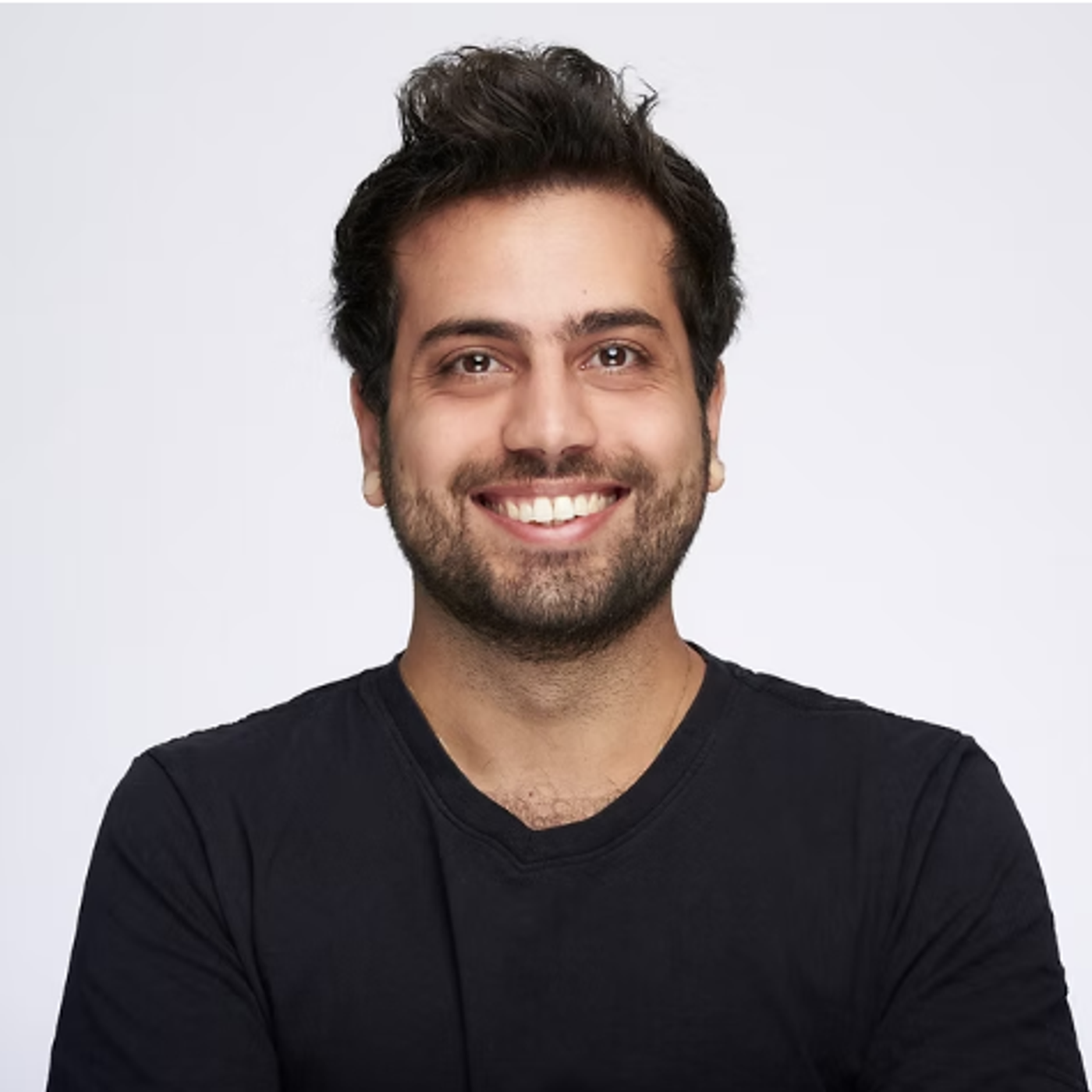
What do investors really look for in a founder, and can Buddhist principles lead to better investment decisions?
In this episode, Daniel Ziv, Investment Manager at Glilot Capital Partners, shares how his experience in product management and startup founding shapes the way he evaluates companies and supports entrepreneurs.
Daniel discusses why founder energy, consistency, and instinct can matter more than early metrics, how investors can guide founders without limiting their independence, and how principles such as kindness and non-attachment help him make clearer decisions.
The conversation also explores Israel’s expanding role in global technology, AI’s impact through 2026, the potential cybersecurity challenges created by quantum computing, and why human judgment remains essential in an increasingly AI-driven world.
Listen to discover why the most valuable quality in technology and investing may not be intelligence, experience, or data, but the ability to remain curious, trust people, and “try to be as kind as possible.”
David Leichner: Clip the switch. Hit connect. Turn it up. Hi, I'm Yitsy Tennenbaum. And I'm David Leichner and this is Hot in Tip Conversations with people shaping what's next. Here we go. Welcome to the Hot and Tech Podcast. We have a great one for you today. Today we have Daniel Ziv. He's an investment manager at Glee Loat Capital Partners Early Growth Front, where he works closely with founders building the next generation of technology companies. Daniel joined Glealoat in 2022, bringing a blend of investing, product leadership, and hands on startup experience. Prior to Gleat, Daniel was part of The investment team at MISMA Ventures, where he invested and supported early age deep tech startups. Early in his career, he spent over a decade in the Israeli startup ecosystem in product management roles, and he also served in Mamram in the IDF Elite Engineering and Technology Unit. Daniel holds an MBA and a bachelor's in computer science and is a certified mediator through the Israeli Ministry of Justice. He is known for bringing a thoughtful and disciplined and grounded approach to his investing and company building. Daniel, welcome to the show. Thank you for having me. It is a real pleasure to have you here, my friend. We've actually known each other for several years and I've seen â Daniel go a long way. So you've spent time both building products and now investing in early growth companies. How does your product background shape the way you evaluate founders and opportunities today? I think that both both in my â product management career and and as an investor, I'm I'm customer obsessed. That's the only thing that I care about. And I think it's important to understand that persona that you're selling to, â along with the user that's going to actually use the product. Because sometimes and and more times than than others, you're going to see that there's one buyer that's perch purchasing the product and there's someone else who's using the product. And this is super important for you as a founder to understand and for you as a product manager to understand. I think this is where the walls collide and â and kind of being merged together. â so that's the that's the I would say the go to market â side of things. But on the soft skill level, I think being a founder and being a product manager is kind of â kind of has the same â the same guidelines to it or the same â same aspects to it. â it's collecting a lot of data points and and analyzing everything together and then form this into one creation or one thing that you actually put out in the world form everything that you can â all the best things that you can think about. So it's kind of a bled between an art and a science and I've always considered myself to be some kind of an artist. â and that's that's the way that At least that I see that I view the world and I d that I think that â great founders are actually great product managers as well. Have you always been an artist? I mean how how did you even get into â product marketing and and then into the investment world? â so for me it it came in â naturally. â I grew up â my my mobs are not used and I grew up kind of in a a very free spirit type of â type of atmosphere. â I've always been attracted to computers and to computer science and been programming since the age of 10, probably something like that. â it was always clear to me that I'm going to eventually be part of the Mumbram unit, â which I did. And as as time â went by and I did more of that, I realized that the thing that I love about â being an engineer is the ability to create something new. And and if you want to amplify creating something new, it's not just coding with your own two hands, but maybe engineering a product and a system that can later be engineered by multiple engineers. And â so that was kind of my graduation from engineering to product management. From product management I became a founder pretty quickly. And after about a decade in the ecosystem doing multiple different â different roles, I realized that the thing that I love the most is working with founders in creating new vibe in the world and and new companies. â so this is when I decided to become a VC. So you mentioned like you work with a lot of early stage founders. And there's an interesting tension where sometimes companies are have this pressure to move really, really quickly. Now, as an investor What signals help you distinguish between healthy momentum from more avoidable risk? Well, the number one thing that â that I consider when I look at â at at different startups is consistency. So the best founders I walk work with are both consistent and stubborn. They wake up every day, hyper focused, really energized in solve this â solving this one problem they dis they decided to build the company around. And the healthy â momentum comes when this stubbornness becomes â something that's showing value to customers in a repeatable way, one after another, and the customers are coming back for more. So â I guess that's when you show when you show true momentum, when something is repeating itself in a consistent way, one after another, that's when things come to pick up and that's the one true thing signal that's â that I'm looking for as a as an investor. It's it's interesting. I hear this a lot from investors that you guys look at the founder more than the company. And and that's is that true? Well, a company as an organization, like every other organization, is some of all its parts and the founders are the one thing that with the one dominant thing you can't really change, right? Market change, product change, customer â requirements and attention change. But the founders and the team remains the same. Culture is something that you can't replicate and can copy. â attracting different talents is something that you can't replicate and and can't copy. â that's the true IP of a company. And again, I I I before I spoke a little bit about founders wake up in the morning obsessed with one type of problem and try to build a solution around it. This is something that eventually worth more than anything in the world. It's worth more than reputation and worth more than the dollar value that investors put in the company. It's this energy and attention that founders bring to the table that cannot be replicated. And this is what truly separates the great from the greatest. So when you're working with founders, I mean it sometimes â it's been said that there are VCs that like to, I don't want to say control, but like to be heavily involved in what's going on in the startup. And and then there are the VCs that are, let's say, giving the founders the chance to run forward, you know, push forward, do what they think is right with guidance and added value. You know, w where do you find yourself on the spectrum between, let's say, thinking you know everything versus letting the founders, you know, run ahead and and do what they think is right. Well, I said this before, but â we're investing in the best funders out there. So â first and foremost we trust them to have the better judgment that we do. â it's it's up to them to build the company, no one else can save them. Still, sometimes people need guidance, people need advice, and I'm happy to be a trusted advisor. â trusted advisor mean that first of all we all or me as an investor, I do have responsibility to the â to where the company is going. Definitely â for a diff. But generally speaking, I like â to think about value creation as something that's being pulled rather than being pushed. â founders, they know what they need and when they know that if they reach out to their VCs and they will ask for anything, they will probably get it or get a Value equivalent of it. â this is something that's A building relationships and then B â helping the company grow and prosper without pushing it â outside of bounds. So you prefer to be reactive than proactive when it comes to advising founders? I wouldn't say reactive rather than proactive, but definitely the answer is twofold in this case. One thing is part of your â was and responsibility as a board member. And this is stuff that, well, if something comes up and it becomes becomes a discussion, definitely we need to be â the the â guiding line and and have the founders build or d make the right decisions for the company, for the sake of the company. But for the day-to-day choices, for the more tactic part of of things, I'm very happy when founders reach out to me and they ask for advice and they ask for â for guidance in in the small things and the little thing, in in the little things and the and the big things. So it might be problems with the co-founders, it might be talent aspirations, it might be cultural or cultural â aspects of the company and building the the momentum of the company and sometimes it's stuff more strategic like when we need to fundraise the next round or how to set up the the site in the US, the first site in the US. So it's a a mix of things. Interesting. Well certainly Gully Lot has some really good success â you know the last few years especially so I it looks like â things are working. So you you you've sometimes been described, maybe self described maybe by others as the Buddhist investor. â how do Buddhist principles like non attachment, mindfulness, right effort influence the way you make investment decisions and support founders through uncertainty? â wow. So if I have to summarize it â in one sentence, is strong opinions loosely held? but no, just to to be â in this cold and egocentric war in tech and â and â startups and and VCs. Now I was a founder myself to town two times and I know how hard it can be. â I think being empathetic to to others and not giving up on being thoughtful creates this energetic flywheel effect that â both funders and investors they want to come back and walk but are still not compromising on KPIs and still not compromising on â knowing on a more I would say selfish note, â being in the moment detached from emotions and mind delusions and and everything that â forgotes our decision making process helps me make better decision, b better investment decision. in â both the investment process and following up with â with supporting the company. and and knowing that helps me sleep better at night. â and and that's the that's the main motivation of â of actually acting along those â Buddhist principles. Interesting. You know I didn't ask you this question before but and I'm not even sure you're gonna want to answer it. But are are there out of the portfolio companies, are there those companies that you kind of â you know, really hold up as being like the leaders, the the one the companies that you would like and the founders that you would like everyone else that you're you know, that you're â investing in to be like them. And it could be one company, it could be multiple companies. â and like I said, you know, if you don't feel comfortable answering that because it might get you into trouble with the others in the portfolio, that's fine as well. You're asking to you're asking him to choose a favorite child. Yeah, that's exactly that's exactly what David is asking, so I won't answer that. But as I as I mentioned before, â talent and culture is something that you can't really replicate, but you can create template around and you can â create â I would say shared resources around. And this is something that we try as a VC kind of look at ourselves as a very involved consultant and and try to replicate â methods and operations that led to one company's success to another. and this is so it's more of a I would say fruitful type of â of legel rather than â dividing it to both like â like you mentioned before. So I can tell you that, you know, as someone, first of all, someone who has children and even a few grandchildren, â it's it's very dangerous when you when you put a favorite child in front of others. â and w and what I found is that I wouldn't say that there is like a a favor child. I'd say that the children or the companies in your portfolio are different. And and it's probably the fact that some need more help, some need less help, and and that the founders, you know, there are those that maybe you like them more personally and some that you like them maybe, you know, a little bit less personally. But, you know, all of them you have the same goal, which is to help them as much as you can. provide that added value in order that they should get to the â finish line of where where it is that they want to get to to achieve their goals. Yeah. â so are you saying you love some of your kids personally more than you love others? No. No, no. No, not at all. I'm saying that â I'm saying that there there are those that, you know, you have different relationships with. Like some of them need you more, some of them call you up on, you know, more for help. Some of them they think they know everything and they pull you up less for help. And they may or may not know everything. It could be that it, you know, and that that definitely is the case with â with my kids. and which is fine, you know, the ones that don't need less help, you know, it's great. You can go out for dinner and they don't bother me the whole time about trying to help them with whatever it is that need help with. So I and also, you know, the fact that I've over the years invested in a few companies and I've sat on a few boards as well. So I I know what it's like to be on a board where they where I'm more involved or to be on a board where I'm less involved. So I I think that's more of â you know, what I was getting at. Yeah, I think it varies from different periods of time because sometimes companies need more support and sometimes less. And it's fun for me to be able to balance between the different requirements and different needs. And founders, they always both within our portfolio and outside of portfolio, like I have many founder friends. â founders they know they can reach out to me and they can always get an objective advice. â again c going back to this â to these Buddhist principles that advices should be â given for free. Be something that â with the best intentions to help the â the person who asks for advice or asks for this help. Uh-huh. So when you come in with good intentions and as a VC you're also incentivized to support the their portfolio companies, â it's it's in our best interest for everyone to succeed. Now, generally speaking, or more broadly speaking, â for me, I look at Israel as as as a country in a momentum, in this perfect momentum that we just mentioned before, just like any other company. â and now we need to bring in more help and more support to help the company grow and or help the company, sorry, help the country grow and prosper. And and it's this momentum. It's right there. And I want every tech company in Israel to succeed. â this is something that truly â I would say ties to â my attachment to the country, the community and â and everything that's â that's around us. When you s talk about bringing investments, â when you â bring bringing resources from outside of Israel into Israel, are you talking only about investments or are there other things that you believe that we need to br Israel needs to look out and bring from the outside? I think resources is is is fairly vague. â it's both investments and definitely we need more â international capital coming into Israel. â that's that's one thing definitely we need to have more commercial â commercial interactions between Israeli companies exporting Israeli tech to the outside world and I think the world is it's huge It's much more than here. Yeah, it's a big place. â it's much more than than than selling to the US. â I think Israeli tech should go and expand into Europe as well, ESA Pacific, so on so forth. There's a lot of different markets to sell to. And it's it's this time â it's this point in time when Israel is supposed to actually build big companies who are selling globally. And I won't like Foreigners in foreign countries to be proud to be working in an Israeli company that's setting up shop in in their country. â and and I want people to say, yeah, I work for an Israeli company. This is something that I truly proud of, and and bringing Israeli tech to the world. So â Daniel, there's a question we ask all our guests on Hot and Tech. You have a ton of knowledge of the tech ecosystem and all of these up and coming companies and and more established companies. What is your outlook for twenty twenty six? What do you anticipate? What trends are you looking forward to in the upcoming year? What do you think will be hot in it? There you go. I I will let you have one guess and two letters. â yeah, AI is definitely something that's â that's â creating a big change, but I'm not sure it's so much of a revolution rather than an amplifier of what we currently already doing. It's very similar to pest revolutions that we pass that we've seen in the past. It's both â from the first UI components in the nineties and cloud computing in the I would say early two thousands. â I've been in tech long enough to experience both. â and I think for us founders and investors, it poses a a big opportunity to build something that's â truly reshaping â the the baseline and â and and what great technology looks like. So if â if up until now we knew how to go from one to ten in a certain velocity, now we can do it double the time. or d or or double the speed and shorten the time and get into â the same milestones in a in a much easier way. Now I think again twenty twenty six is going to be an amazing year for Israel. â Specifically for for tech, we are creating a world where â services, products and and workforces are much more effective. So my thesis for twenty twenty six is to lead how humans experience technology and how humans experience AI. And it goes both to the enterprise technologies and for the long tail, for SMBs and and for in day-to-day B2C lives. So â I'm I'm excited. I'm excited for 2026. I I I'm really excited for 2026. It's amazing that when you see certain groups of people starting to use technology you know that it's taking off, right? So when when grandparents are talking about and I shouldn't say that because I'm a grandparent but when you when grandparents are talking about AI and chat and Claude and they you know and they've used â you know Synthasia and they're building videos and all these things and you know it's it's quite amazing actually that â you know and it's kind of like the signal that it's hit the entire world. Because I remember when the internet you know, took off and â you know, Amazon started and we had all these little companies trying to sell on the internet. And everybody was saying, Who's gonna put their credit card on the internet? Right? And today we'll today we're walking around with our with our wallets on our phones and you know, and â i it it's just incredible to see that in such a short time we've already hit that point where it's propagating throughout the world at a speed that we've never seen before in tech. And I think and I think that's really incredible. So, you know, on that note, â for people starting out today as founders, operators, aspiring investors, you know, the pace of change is now really so fast, it's overwhelming, especially with AI accelerating everything. So What advice would you give to, you know, people who are in college, people who are just finishing the army, people who are, you know, just coming into the market, or maybe people who are in product marketing or product management who are thinking about going into, you know, investments. You know, what advice would you give them to build clarity, resilience, and good judgment early in their careers? Yeah, the advice is always be playing. I'm a geek myself. I always think with â new products and and and new solutions. And â with the pace of things advancing, â it's very important to stay up to date and and play with these new technologies. Now adding to that, I think that new tools and and sources that we currently have are presenting a false image or even an illusion of infinite wisdom when in fact it's merely just fancy statistics, right? â so the the advice is that it's good to ingest more information faster, but â don't give up on your God given human intelligence. â so trust your instincts, understand your emotions, like and understand what's happening inside, and â think critically about everything. Everything that AI is presenting to you. â think about whether whether it's â it's true or not. And â and try to be in the back independent about it. And I think one more thing, maybe, if I can add to what you said, which I think is 100% right, I I I think that our limits, our boundaries have kind of disappeared in a lot of ways. And you know, if the internet opened up the world to computing and the ability to do many things that previously couldn't have been done, AI takes that exponentially higher and And you know, the sky's the limit. Seriously. It's it's the sky is the limit. And and what we can do with AI, what we can do with quantum computing, â what we can do with, you know, all of the new stuff that's coming out. It's just it's just amazing. And â you know, I think â I think your advice is sound and I think that â people coming into the market today, they have two ways they can go. Either they can fall to AI, meaning that they're coming out, let's say as coders, as programmers, and nobody wants to hire them because what they learned in college and university, maybe now they're doing a lot of that stuff automatically or, you know, maybe not automatically, but semi automatically. And â it could well be that â it could well be that â you know that they will be â confused initially and we'll see. It's gonna be very interesting. â you know, so I said they can either fall to AI or they can embrace AI, they can push forward, they can, you know, really make a career for themselves. Yeah, I totally hope so. But let me ask you something. As an investor, it it seems like every company must be AI. Every no matter who my plumber is provides AI driven service. How do founders know when AI is real and they're actually put you know providing real value with AI. Like can I have a company that is not all about AI today? It i it feels like the that it it's and it really is great. I don't disagree. I just at times I feel like it's all encompensing and doesn't leave room for anything outside of it. Yeah. â I think AI is a great tool to have a new toolbox, but it's not the â the not the only thing that you need to present out to the world. Now, today in twenty twenty six saying we use AI is like saying four four years ago we use the cloud for a c for our infrastructure. So it was cool in two thousand fourteen when I started my sec my first company. â but it's not something that â sustainable anymore. So of course you're using AI, of course it's part of your core products or â the the development cycle or even your go to go to market â objectives and and go to market tools that that you're using. So definitely every company is using AI, but that's not the main case. Like I said before, â AI is enabling us to do what we did in the past, just faster and sometimes more accurately. â it's not replacing everything that we did before. I think that's a very good point. And I think that â on on on the flip side of that, â because â Glilot is solidly in the cyber world as well, we see that it does open up opportunities for hackers, you know, if the internet â enable them, again, the AI is just taking them to a different level. And â I think Once they get a hold of these â quantum machines in their universities, I mean, it's just gonna be crazy, you know, to see just how much they're gonna try to and and the different ways they're gonna try to hack into everything. Everything. And the cyber companies that you're investing in are gonna have to keep up and they're gonna have to keep reinventing themselves in order to keep up with, you know, these new generation hackers and â which is why cyber is a wonderful place to be investing to begin with. Yeah, cybersecurity in general is â it as a market it's very resilient, but as a tactic it's something that's kind of a cat and mouse type of play, â Tom Bajier kind of play. And and you're always going to see attackers advancing and then â cybersecurity companies and and and protectors are coming to protect the the two assets that are underlying in in a company. And and it's It's always going to be an infinite cycle. So AI poses new threats today and we already are investing in AI â AI first cybersecurity companies and cybersecurity companies that are solving for AI threats. And when come to quantum advantage is going to be the the next phase and and â enriching the market, we're definitely going to see this â quantum â attackers. attacking traditional or or current â cryptography. And we're also investing in quantum. So in that case we we we have â we have we have that covered. I I wouldn't have expected anything less. Well Daniel it's been a real pleasure to have you on the show. I don't know is there â a mantra that you want to leave us with from â your Buddhist background â just try to be as kind as possi as as kind as possible we really need it. That's amazing. Great having you on. If you enjoyed this episode, make sure to subscribe so you don't miss future conversations with the people building, breaking, and reshaping technology. And this podcast is proudly sponsored by C2A Security, the only context-based product security orchestration platform. Stay tuned for lots more Hot Integ. Flip the switch. Hit connect. Turn it up. Hot Intech! Jack. In your hand, on your wrist, tomorrow starts here today. Jack. What's new? What's now? What's next? We're live. Big brains, big dreams on the edge of the line. Hit play, lean back, let your mind connect. Three words, one track.