Why AI Won’t Replace Humans (But Will Change Every Job) | Gary Survis, Insight Partners

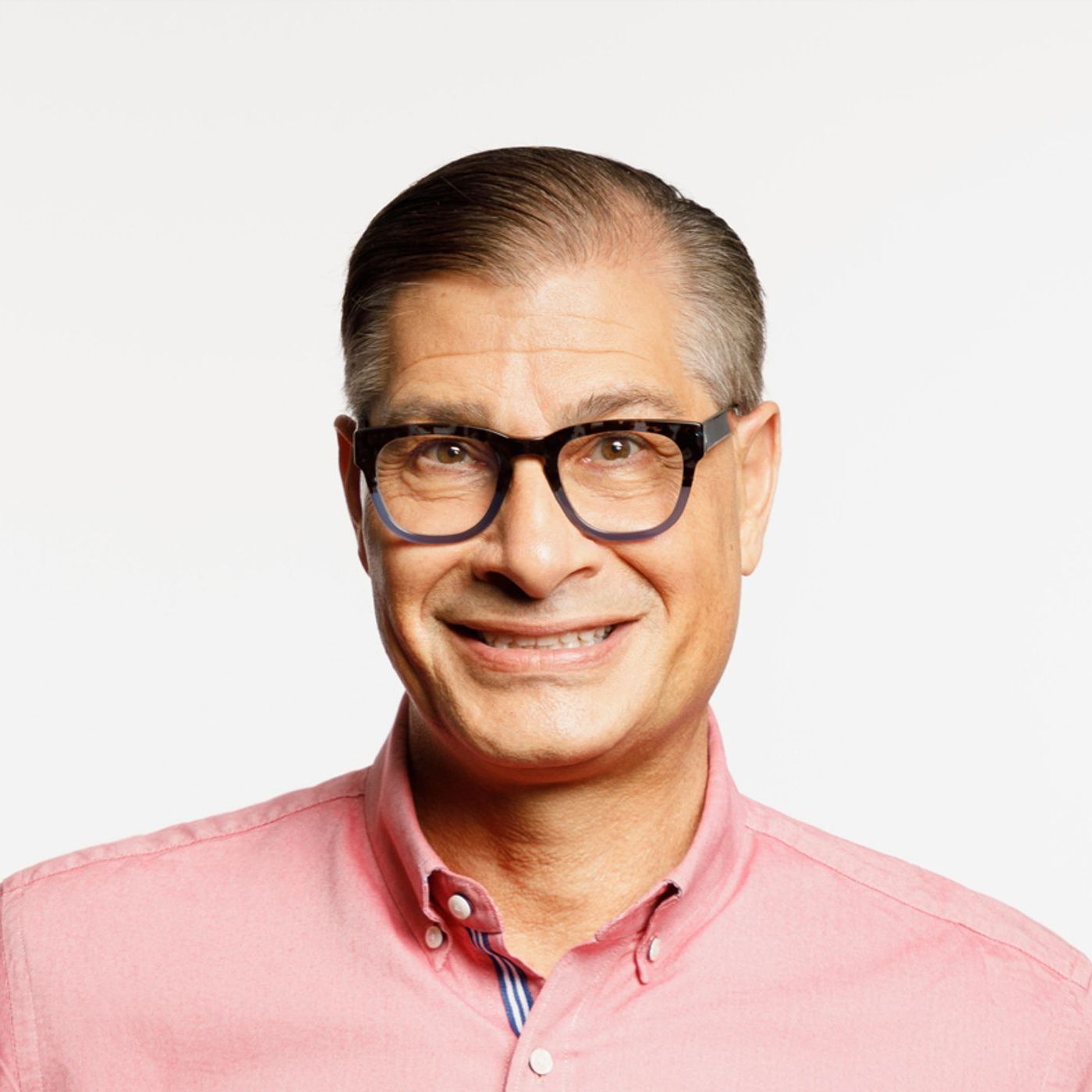
In this episode of hot-in-tech, David Leichner and Yitzy Tannenbaum sit down with Gary Survis, Operating Partner at Insight Partners. Gary shares why AI is the biggest technological shift of our lifetime, why he compares it more to electricity than software, and what every leader must do to stay relevant in a rapidly changing world.
The conversation explores why Gary remains firmly on “Team Human” despite AI’s rapid advancement, arguing that the future belongs to those who embrace change rather than resist it. He explains why three uniquely human capabilities, judgment, empathy, and verification, will become even more valuable as AI reshapes work, and why authenticity will matter more than ever in a world increasingly flooded with AI-generated content.
David, Gary, and Yitzy also discuss how AI is transforming business models, from startups to enterprise software, and why the future competitive moat may lie in contextual intelligence and proprietary data rather than technology alone. Gary shares his perspective on the evolution of SaaS, the rise of agents, and why domain expertise will continue to matter deeply even as AI becomes more capable.
The discussion also expands beyond software into infrastructure, exploring the growing energy and water demands of AI, why data center power challenges are more about grid modernization than energy scarcity, and where venture-backed opportunities may emerge in areas such as battery storage, grid orchestration, and water monitoring.
From marketing transformation and “job rebundling” to the future of education and work itself, Gary offers a pragmatic, optimistic, and deeply informed perspective on how individuals and companies can thrive in the age of AI.
David Leichner: Welcome to the Hot and Tech podcast. Today's episode, have Gary Service, who is a operating partner at Insight Partners, where he leads the AI transformation and serves as the key force behind the firm's marketing center of excellence across its 500 plus portfolio companies. Gary focuses on strategic branding, category creation, and operational excellence to propel scaling organizations growth. He's also been driving insight strategy to infuse the power of generative AI into operations and deliver operational efficiency and greater effectiveness. Gary blends a combination of marketing innovation, venture experience, and sustainability strategy. He previously served as a chief marketing officer and general manager at Precisely,
Gary Survis: Thank you, thank you. So excited to chat about some of my favorite topics today.
David Leichner: Well, I'm really excited to have you here because as you know, I'm a big fan of yours and â Gary is like one of the incredible marketeers that I look up to and I can tell you who the others are, but they're all in the same category of excellence. So, â you know, Gary, you describe yourself as not your typical marketing guy, venture guy or green guy. And looking back, please share with us some of your early background. where he helped modernize a 45-year-old enterprise technology company and position it at the forefront of the big data transformation. Earlier in his career, he founded multiple ventures, including practical digital marketing and Go Green displays, pioneering sustainable business practices well before ESG became mainstream. and how those unconventional pivots from American Express to founding sustainability driven ventures to leading marketing at a big data company, how did this shape the way that you approach AI transformation at scale? In parallel, Gary has been a lecturer at the Warden School for over a decade, teaching MBA level courses on environmental sustainability and corporate strategy, with a focus on aligning growth and value creation with long-term impact. He holds a bachelor's degree from the Warden School and an MBA in marketing from NYU Stern. Gary, welcome to the show.
Gary Survis: â So first of all, thanks so much for having me. I'm like thrilled to be able to chat. â And David, I know you and I have chatted many times about a lot of different topics, but I am sure one thing that you and I can both agree on is that we both should be dinosaurs at this point. Like the level of technological â innovation and change has been incredible. And so I look at â graduating from NYU Stern with an MBA in marketing and recognize that I did this when there was no internet. â I came to work at American Express in marketing as my first job. We did a lot of direct mail. We, there were no websites. We did some events. We, there was PR, there was television. Like there were no tactics. literally no tactics that we so rely upon today. And so I think as you kind of go through each of these different pieces and the reason why I put that not typical introduction to my LinkedIn profile is it's just been so many different changes and disruptions along my entire career from you know, the age of digital marketing to the age of sustainability to the age of big data, to the age of cloud infrastructure to now where we are with AI. and I think the, the piece in, in when I speak to people and when I mentor younger folks, I really push on the idea that you need to be comfortable with change. and you need to be constantly investing in yourself. And that is more clear than ever today with what's happening with AI and in general with how work is evolving, how our use of technology is evolving. And I'm always disappointed when I speak to folks that aren't making that investment because again, starting with... What I said, like I should be a dinosaur. I shouldn't be vibe coding apps. I shouldn't be creating all that I am every day and changing the way I work so dramatically. But I do because I'm genuinely curious. I genuinely want to solve. I genuinely want to learn. And I wish more people were like.
David Leichner: You know, I agree with you completely. And from one dinosaur to the other, I started my first marketing role was at information builders in New York City. this, yeah, IBI, know, Broadway and 32nd Street, Koreatown, and â no internet, no marketing automation, no AI. Yeah, a lot of events, you know, we did a lot of events. We did a lot of, you know, â
Gary Survis: You â wow. Yes, yes, yes. And by the way, the event thing, you know, David, I think the value of events today in the age of AI, I tell people your only goal in, in marketing is to figure a way to get in front of people. So you can actually be person to person and it's going to be a bigger challenge than ever. And so like, what is, what was old is new again. mean, events are more important than ever to.
David Leichner: Yeah.
Gary Survis: you know, to the point of the tools in the tool belt.
David Leichner: 100%. I was in a meeting today earlier and the woman who got on, she's actually from India. And I said to her, hey, do you remember when we were in the sponge town together after, it was one of the events that we were at and she big smile to her face, you know, and it's, yeah, you know, people still buy from people. We're not buying from AI yet.
Gary Survis: Yeah. No. No. No.
Yitzy: So I'm a little bit â younger than you guys, which I think is mostly a dis- By the way, Gary, throughout this podcast, it's more of a educational journey for me where David kind of introduces me to the journey that tech went through over the many years. maybe that segues into our next question. I think, Gary, it seems like you've seen these cycles happen again and again. â Big data, sustainability, kind of. the wave that comes and how the industry either embrace or doesn't embrace it. I'm wondering through that prism, how do you see â Gen.ai, which is really probably, I wonder if you see it as the biggest game changer in your career, but from that experience, how do you, how should we embrace it as a industry?
Gary Survis: Yeah. I think when I look at AI, I believe very strongly that it is the most important transformation, most disruptive, the most, the biggest level of change that any of us have experienced in our life. Can I make it sound any bigger? And so I...
David Leichner: Hahaha!
Gary Survis: I say this literally as I was mentioning, I was there, I purchased one of the first Macs off the assembly line in 1984. So I saw the PCH, I saw the changes in technology as we've gone through and all of them have been important. And at the time people have spoken about the disruption. But the reality for us today is we're on the precipice of such a dramatic change. I would liken it more to electricity than any other technology change. And I say this because every aspect of what we do, and I'm going to bring in robotics as well, because I think it's AI plus robotics. that truly are going to transform our society. And you should know I am on Team Human. I am a huge believer in the role of humanity. And I'm also not the chicken little of the sky is falling and that we all need to run for the exits. That's not to say that we're not going to have dramatic change. And that's not to say that we're not going to have many people in many roles fail to adapt appropriately. And so my push here is, you know, and I've seen this, there's so many people who are, have been in incredible roles and have said, you know what? I'm going to leave this job, this job that I'm making good money, this job that I am successful, and I'm going to move over. to be relevant in the AI world. And I think we're gonna see a lot of that. And I think â we all should just be comfortable, embrace the change and like get on the journey.
David Leichner: So I can tell you that I was at a automotive cybersecurity conference at the beginning of middle of November in Berlin. And two of the guys who were there who I know for quite some time, they came over to me and I'm like, you guys have any money yet? Because they're not spending very much money right now on compliance and stuff because they've already gone through their R155, 156s and all that stuff for vehicle security. So they said to me, Actually, David, you know what I'm thinking? I'm like, well, there are these startups that are trying to bring me on board for my domain expertise. said, let me guess, are they based on AI? Two, I think it was three guys who, know, closer to my age, who are now reinventing themselves. And you're 100 % right. Yeah, they see it. And they're going to make that jump as well.
Gary Survis: I know, I feel it every day.
David Leichner: So I haven't brought this up yet in our podcast and I did in my previous podcast and it almost became a mantra. But do you remember the Jetsons? Okay, I feel like we're about to, I feel like we're starting to live the age of the Jetsons.
Gary Survis: Yes, yes, yes, yes. Deliver on the promise. We're going to deliver on the Jetson promise. Yes.
David Leichner: We are, we definitely are. â And, you know, I wonder if when you're teaching at Wharton, you ever bring up the jet seats, but if you don't and you do, you know where to give the credit to. â So you have been teaching sustainability and corporate strategy at Wharton and it was long before it became a fashionable thing. And I really wish I would be able to sit in on one of those classes. And maybe when I'm in the area,
Gary Survis: Yes.
David Leichner: I'm going to call you and say, Hey, you give me a class because I would really like to sit on it. So, you know, AI and cloud computing, they, continue to scale. we're to be honest, I think we're just at the beginning of the AI revolution. It's like, it's, it's mind boggling. It's just mind boggling. So how are you thinking about meeting growing power demands? You know, like where are the opportunities for venture backed companies in the market? I know that we have Jensen saying. that people should become plumbers and electricians to handle the server farms. So I guess I'd ask two things. One is, where are your thoughts in meeting those power demands? But also, how do we protect those farms of energy? Because they're going to become super targets in the wars to come. And also cybersecurity.
Gary Survis: Yep. So â I want to start by saying â at a top line level, the challenge of powering data centers is not a new challenge that just came up. Going back to the discussions about big data, the needs and growth of servers and data centers has been something that's been well understood by the hyperscalers â for more than a decade, to be honest. And the structures and the managing and understanding of where energy is coming from â is well understood. And I have several points I want to make here because I think there are some interesting things for us as society to think about. So the first one is, you know, Electricity demand is growing. They're projecting about 2 % annually and it will continue to do so. And today, I think they say somewhere on 4 to 5 % of all US electricity is being consumed by data centers. They'll believe that that'll move up to maybe 12 % by 2030 at some level. But you should know already, Amazon, Microsoft, Google, Apple are some of the largest corporate buyers of renewable power globally. And they have massive programs in place. Microsoft took Three Mile Island, which you may remember because you're a dinosaur, David, â when the nuclear â plant meltdown and is turning it into a data center there. â
David Leichner: Hahaha! Course.
Gary Survis: The issue here, I will add, that, and not to in any way get political here, but like I think nuclear is going to become a much more important energy source. And I also believe it's not a pipe dream as it has been over the years, that nuclear fusion will be a reality. And I think the bigger issue here when it comes to energy, is the issue we've been talking about for well over a decade, not how much energy. It is the delivery of energy through an antiquated grid that has not been invested in. It's an infrastructure challenge more so than an energy challenge. And I just want to speak for a moment about water because â people bring together energy and water as well. And again, if you take a look here, We have water issues, there, you know, I think Israel as an example is a great poster child for how dealing with the fact that there is no water, there is investments in desalination. There's investment in water that is there and people love to call Israel the Saudi Arabia of water. But like the reality here is again, the issue is not the water. The issue is the infrastructure, the pipes, the treatment centers, the way we transport it, the way we deal with it. And so this is my very long way of saying I do hear the message that the data centers are going to take more energy and water. But I am saying the red herring of it is not the amount of energy It is our lack of investment in infrastructure. So where would I invest? would invest in grid orchestration and interconnection software. I'd be looking at all the battery and storage systems and micro grids. And I would look at some of the more sophisticated water monitoring and remediation opportunities. And this is really, I think, the opportunity for many in this space because the need is going to be great.
David Leichner: That is very incisful. Some of that I hadn't thought about yet. So now we have to put into chat and say, OK, so which are the growing companies in this area? And get my broker on the line. Definitely.
Yitzy: No, it's a fair point. I feel like all infrastructure, no matter what it is, all those categories are neglected and they're only improved when it's absolutely necessary and it's not â proactive.
David Leichner: okay. â
Gary Survis: So I would, I would make the point here. We as humanity are awful â at anticipating, taking action to â really in front of issues. Climate change is a perfect â point here. It's slow moving. We sort of know it's coming. Some places are feeling it better. They're already investing Miami, New York, et cetera. Others are ignoring, but we're awful at it. We're awful at taking the actions that we must take to get in front of issues. And it is only after failure that we pick ourselves up, move quicker. And, â you know, again, you didn't ask about climate change, but I'll just add in here. that for all the things that we're not doing about climate change, there are things that science and technology will help us solve when things get really bad.
David Leichner: And you know that as an avid trekker and someone who's been to the Himalayas multiple times, I have seen many studies about the melting â glaciers and ice caps, everything from Everest all the way down from right across, mean, Pakistan, India, China, Bhutan, there's gonna be some serious ramifications, not just for the people who live below who who benefit from the water, but also from the changes in the landscapes and everything else. And nothing is really being done about it. I don't even know what can be done because the climate change is what's causing it, but certainly they can be putting into place already some safeguards, but these aren't the richest countries in the world also. â
Gary Survis: Hey, and just, you know, I remember when Obama was president, â he made a state of the union, which resonated with me because what he said was agree, there's general agreement that the climate is changing. The point of disagreement is whether it's manmade or it's just our planet.
David Leichner: Right. Interesting.
Gary Survis: Now, science may tell you the answer to that, but let's put that aside for a moment. The issue here is for us as technologists, as investors, you should be saying what he said, which is, agree or disagree, this is a massive opportunity around the world. So why wouldn't you take advantage of
David Leichner: And why would you deny that it's happening? I mean, I think everyone feels it. You don't have to go far to feel that things are changing.
Yitzy: Gary, we have a question we ask all our guests and I feel like it's weird to ask you this because this is all we've been talking about. â looking ahead, what do you feel is hot in tech in the upcoming 12 months? â I feel like all you've been doing is answer that question, but maybe you want to double click on something you said or a different direction.
David Leichner: or something you're seeing across the many companies that you're dealing with.
Gary Survis: Yeah, look, â so the first thing I think everyone needs to... So there are two things I want to say here. So the first thing that I think is interesting is as investors, you can know that the world is changing, that AI needs to be in your product, that you need to change your product if you're an existing company. And if you're a net new company, you're going to create a new model to build the company. I was reading, like the typical SaaS company is $200,000 to $300,000 of revenue per FTE. Open AI is $1.5 million per FTE. Cursor is $3 million per FTE. And so you have to recognize our models are changing. And we, you know, as investors don't expect our companies to be cursor. Cursors started a different way, but I do think our businesses are going to run differently. First. And I also believe pretty strongly that the opportunities will be incredible if you know where to focus. There's been a lot of talk about, you know, the great saskalypse and like, you know, do we need software? My comment about that remains is that, you know, we need software for all the reasons we've always needed software. Because David, as technical as you are and all the things that you could do, Do you want to create governance? Do you want to deal with the security issues? Do you want to deal with the updates? Do you want to deal with the maintenance? Companies could have created a CRM years ago, but they chose not to because they didn't want to deal with the interconnectivity issues, the changes that were going on. so software will evolve. I think pricing of SaaS will evolve. And I think the opportunities for many companies is to recognize that their moats are primarily around the bespoke data that the LLMs don't have. And there's much of that. This is data, you know, if you were in a â healthcare company that is capturing all of the individual data points and transactions through a system, that is data that even if HIPAA controlled, the trends, the data, the synthetic data that can come from that, you can't recreate it. And so there will be many opportunities across so many verticals to create incredible solutions that will power agents. I talk a lot about what I call the system of context. We're creating what is called the system of context that has three levels. Level number one is identifying user need. Level number two is creating the context. That's combining first party, second party, third party data in ways that no one else can. But context in and of itself is insufficient. What you need that context to do is to power agents the most reliably because trust in agents is the issue. And if you don't have the best context, you can have the highest level of trust. And so in pushing all of this, what you're trying to determine is how do I create a system of context that allows my solution to deliver a level of reliability as I weave together human and agent in the products. That's where the opportunity is.
David Leichner: really interesting because I've heard a lot of discussions about what could be the differentiators for different AI companies that are coming out now, vis-a-vis the established companies. We also saw this in the internet, â the internet age, but now it's going to be very different, like Blockbuster and Netflix. It's a very good example of how the internet just took them over. I think, and I wonder what you think about this, that how important will be the domain expertise? Because when we're talking about building context, So domain expertise, so you have someone who's been doing, I don't know, tax accounting or banking for the 20 years, and then you have someone who creates agents that would basically be doing the same thing, but they don't have the, you know, it reminds me, I mentioned the plumbers and the electricians of Jensen, From Nvidia, but. It reminds me of the plumber who comes in and you you said, oh, no problem. If a plumber can do it, I can do it. You get under the sink, you try to fix it and it doesn't work. And he goes under and in one second he does it. Why? Because he knows exactly how to turn that wrench, you know, and, and the flip side in, the tax industry, in the insurance industry, in the cybersecurity, if you've been doing it for 20 years, you know, the nuances, you know, you have the insights. And I wonder what you think about how easy it's going to be to build that context into AI. And let's say how long will it be that the people who have the domain expertise will have the upper hand maybe â in the market as AI starts to learn those different professions?
Gary Survis: Yeah, so, you know, I'll give you an example of... an industry in a moment, but I want to add one point up front. So my, my belief is there are three core capabilities that are uniquely human that we will be doubling down on. So number one is judgment. we exhibit judgment and way alternatives in a different way in the ways that are informed by our experience. The second is empathy. Empathy is not about big hugs. Empathy is about understanding the root of the problem, understanding where this is coming from. And the last one is, you know, I think the one which we talk about a lot today, verification and being able to know the difference between right and wrong. And so when you take those capabilities and you begin to look at roles, I agree with you, David, that the difference between a The human role and the development of solutions is those capabilities. And so one of the pieces that I think is really interesting is, let's pick an area, accounting. And people say, well, accounting, you're not going to need accountants because it's all rules-based. And once you have the rules, it can just do it. Well, if that's all it was, we didn't need accountants before. We needed accountants for judgment. We needed accountants for making choices based on your needs and understanding what you're doing. And so while the rules can be leveraged and AI can do it, it doesn't replace the need for judgment and empathy and verification and understanding these pieces. And software that is developed to do that is going to deliver that.
Yitzy: It goes back to the point you were talking about the events. think as marketers with AI, could create the biggest and commercial or the most well-designed email. But then you find out that the emails that really work best are the text only or the videos that work well is some person recording from their car as opposed to overproduced with explosions and effects. it goes to that point of I guess people are looking for, you called it empathy, but they're looking for the human connection at the end of the day.
Gary Survis: And authenticity, like the amount of AI slop that is taking over social media is astounding. so, you you need to have your person come through, your ideas come through, what makes it not this beautifully shaped thing, but is messy, because we appreciate the messiness. We like to work through the messiness. And I think, you know, for me personally, you know, I want LinkedIn to be my voice, not a synthesized version of my voice. I want my ideas that I'm connecting to be what I'm talking about. And I think we as humans, again, going back to your point, Yassi, which is we are going to, we're going to need to connect with humans more to understand should I believe what I'm seeing? I understand, should I, can I work through my solution with this person? And so, you know, it's crazy times, but you know, I'm still on Team Human.
David Leichner: Well, you're team human and â you're also the marketing educator in chief. And you've emphasized very much accountability, analytics and rapid adaption. So as AI reshapes marketing itself, you know, what's what's scale, by the way, â just one thing about the last, the last note where you talked about. One of my best campaigns over the last two years was where we have a small TEM, so we're not going after tens of thousands of companies, sending out 200 federal express delivered letters, which they were really handwritten. They weren't even those ones that you can buy â with something very relevant for each one of the people that it was being delivered for, and it was customized for them. So it took a bit of time to customize it, but And the response was extremely good. And there was no, there was very little tech involved, you know, as far as marketing automation and, and this goes back to the, you know, sometimes the old way texts, one to text messages, sometimes the old way actually works because people are tired of getting all that glob. So, you know, back to, you know, the, the marketing educator in chief. So AI is reshaping marketing itself and what skills.
Gary Survis: Yeah.
David Leichner: Do you really believe now that for the upcoming CMOs, the people who are learning, they're getting their masters in marketing, growth leaders, what do they need to develop in order to stay relevant?
Gary Survis: So let me, let me first start with just an, â a general overview of change in marketing that will be what I call job rebundling. Now job rebundling has three steps to it. Step number one is tasks change. Step number two is roles change. And step number three is orgs change. So in this re-bundling motion, there is a need to recognize that if you, and you hear this sometimes where someone says, you know, just doesn't, AI doesn't do what I do. AI can't â write as well as I do or AI can't â create the way I do. It is a misunderstanding of what our roles are. And so, you know, going back to those three skills that I mentioned, as you leverage those three skills, you need to embrace that as your role. You need to also jettison a whole bunch of things that you don't want to be doing because they are not actually driving value. And There is no task that I can automate today. Anything. This weekend I was running into an issue. I wanted to up load some PowerPoints into into co-work, couldn't do it because it doesn't accept PowerPoints and make it into PDFs. But then the PDFs were too big. I created like in like seven minutes a bulk PowerPoint PDF compressor app. There is nothing that won't that gets in my way anymore. And so this is my long way of saying your job is going to be very different in marketing.
David Leichner: You
Gary Survis: Your skills are going to be about your capacity to vibe code solutions. And that's not full apps, that's solutions. It's going to be about leveraging tools in a different way. It's about leveraging agents much more in your job. It's about figuring out where you're adding value and making sure you have time for that. And so I look at marketing and know it remains relevant. but what we do will be completely different.
David Leichner: You know, it's kind of funny. It's like when somebody asks you in a job interview, so how hands-on are you? You know, in the old days, and today it's like, if you're not hands-on, what are you?
Gary Survis: correct?
Yitzy: But hands-on means something else, because back in the day it means, you sitting there and designing the presentation or writing the blog? It's kind of, no one is hands-on. We're all project managers of the various tools, and we're more of, we're guardkeepers of what's happening. I don't think any of us are really as hands-on as a marketer 10, 15 years ago.
David Leichner: It depends how you define hands-on, you see. I think it depends on how you define hands-on, you know, like, and I'll tell you what I mean by that. If I used to have a staff of 10 people and each one was doing their own thing, today I could probably get away with two people. Gary might say, you only need one person, me. Right. So I'm saying if that's not hands-on, what is hands-on? You know what I mean? It's hands-on in a different mentality.
Gary Survis: zero people supporting me today. I am â completely independent and self-sufficient. Self-sufficiency is the example of hands-on. I actually don't want to have to tell someone what to do. I want to be able to have the agent deliver for me what I want. And like I said, I can get initial drafts from them like I could entry-level people in the past. I can be working on multiple things at the same time.
David Leichner: Yeah.
Gary Survis: And I'm waiting for them to come back. And by the way, though, to your point, you see, and I want to make this clear. Whatever comes back, I may rewrite completely what comes back. I might choose to deemphasize or reemphasize or, or making things that â AI may have connected that are it misinterpreted. And I, that wasn't the point. And so, you know, we. As much and as powerful as these tools are, if we totally outsource the value that we could be bringing, that's where I get scared. I get scared about education. I get scared about a younger generation that wasn't trained to work through problems and challenges and being able to assimilate information and find pattern. Like if all you do is hit the easy button all day, there is a bit of atrophy that's going to go on. I think, you know, I think all of us, I don't want to hold onto things we don't need to do, but I also want to make sure we train students and folks coming into different professions about how to think. Because I'm going to argue that the liberal arts education will have never been more important, but you need to actually get educated. You need to learn how to bring these ideas together. you need facts? No. Facts will be in my here, right here. They'll come right up in my glasses. But what I do need is a way of understanding the lessons and applying those lessons and figuring out what that means. That's the new challenge of humanity.
David Leichner: thinking. Interesting. Well, Gary, this has been an incredible episode. â I think if, â you know, the three things you mentioned, they're absolute takeaways. And I think that, you know, critical thinking, judgment, judgment, even, and I'll add one thing, one more thing to it, which I think is important is quality checking, you know, quality control, because today, as we know, not everything is a hundred percent. And if you're going to put out a document and on the third paragraph, said, I tried to export the file you wanted and it didn't work and it just comes up in the middle. I've seen things like this. People are going to get that and say, these guys are using AI and they're not even checking themselves. How am I going to work with them? So I think definitely. And it's been great. And thank you very much for being on the show.
Gary Survis: Right. Right. Of