Building AI Companies That Last: Strategy, Trust, and Responsible Innovation with Einat Metzer
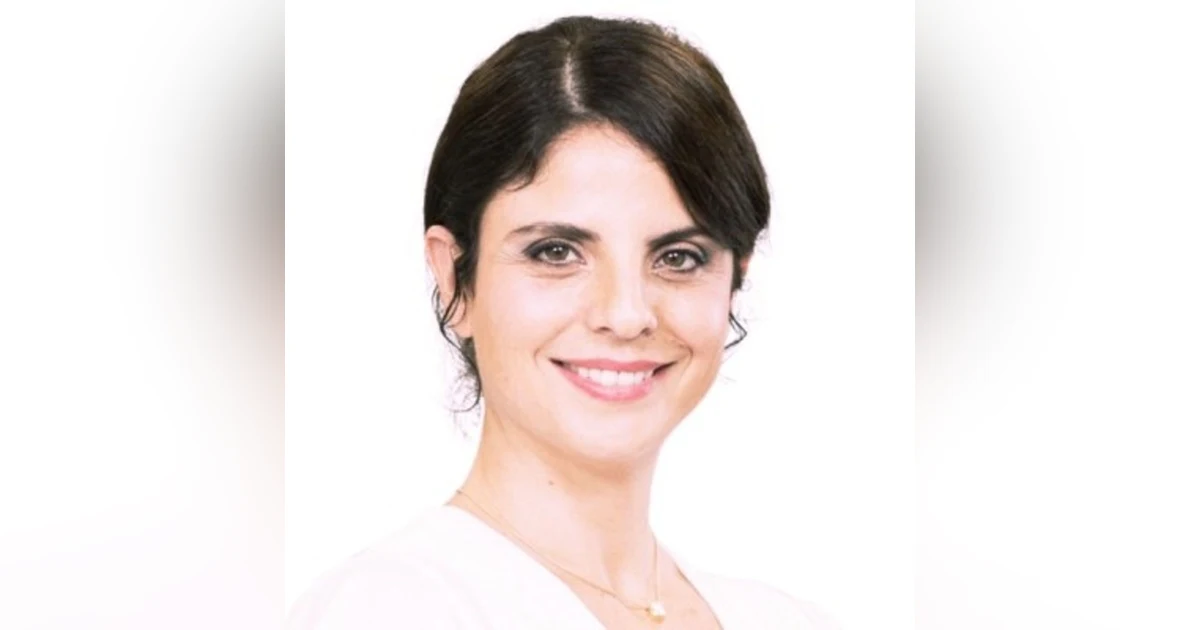
The advice to “just move fast” can quietly wreck a startup, a corporate team, and even a breakthrough AI product. Einat Metzer reveals the harder truth: enduring businesses are built by constantly reworking strategy, aligning operations to KPIs, and protecting culture when pressure hits hardest.A veteran of venture capital, startup founding, and Fortune 500 leadership, Einat has seen what most leaders miss. She built Emedgene into a global leader in explainable AI for clinical genomics, negotiated its acquisition by Illumina for a 10x return to early investors, and then helped lead post-merger integration inside a large public company. In this episode, we explore:
- Why founders and executives need to treat strategy as a living, breathing system
- The hidden cost of corporate integration when a startup moves into enterprise scale
- How explainable AI earned trust in healthcare before the modern LLM boom
- Why human-in-the-loop design matters when patient outcomes are on the line
- What Einat sees as truly “hot” in tech as AI adoption collides with broken operating models
speaker-0: Flip the switch. Hit.
speaker-1: Connect. Turn it up.
speaker-0: Hi, I'm Yitsy Tenenbaum. And I'm David Leichner and this is Hot in Tip Conversations with people shaping what's next. Here we go. Hello everyone and welcome to another exciting episode of Hot in Tech. Today we have with us Enat Metzer, who is an entrepreneur, executive leader, and growth strategist with deep experience building and scaling companies at the intersection of AI, data, and regulated industries. She has operated across every phase of the business lifecycle as a venture capitalist, a startup founder and CEO. and a Fortune 500 executive. As the founder and CEO of Imagine, she pioneered the use of explainable AI in clinical genomics, scaled the company into a global category leader, and successfully negotiated its acquisition by Illumina, delivering a 10 times return on investment for early investors. Following the acquisition, Enat joined Illumina's leadership team, where she led post me merger integration She built and scaled a $450 million business unit, serving as its vice president and general manager, and led global strategic growth initiatives across four continents. Earlier in her career, Enat was a venture capitalist at Gemini Ventures, partnering with early stage founders. She holds a degree in computer science and economics from the Hebrew University of Jerusalem. Einat joins us today to discuss what it takes to translate emerging technologies into sustainable, Enterprise value, align complex global organizations, and lead businesses through market disruption. Enat you are incredible. Welcome to the show.
speaker-1: Thank you, David. So happy to be here. Thank you for having me.
speaker-0: â it's a real pleasure, someone with your background. I mean, really incredible. And, you know, you've experienced the full life cycle of a company from founding and scaling a startup to navigating acquisition and senior leadership inside a global public company. Can you please share with us, you know, how has that journey reshaped how you think about building and enduring businesses?
speaker-1: Yeah, so I'll I'll start with a story. at Imagine, the company I founded in the early days, we were extremely resource constrained, and I'm sure a lot of the founders that listen to that can relate. So at certain points of the startup trajectory and until we had more funding, I headed sales, marketing, bidding and more. As a founder CEO, you're extremely biased towards execution, and you nearly never invest enough time in working your organization strategy. And I was no different. The benefits of working strategy are less immediately tangible than closing a deal, obviously. So you tend to neglect it. But what I learned was that if you're not constantly reworking your strategy, you might be pushing your team very hard and spinning the wrong direction, especially in today's environment, right? Because it's so fast paced, even more than ever before. And it will almost surely hit you when you're at your lowest, when you're running against competition and they have taken over a large customer. Or you go to fundraising only to realize your story doesn't sound differentiated enough. Or when you're already running low on cash, right? So strategy is a living, breathing thing, and you should dedicate regular time on your calendar to make sure you're still steering the ship in the right direction. Now, interestingly enough, the same is true for corporates. There's no way to be a good leader without actively and continuously engaging with the strategy of the organization. But when I moved to corporate, I was surprised to learn that corporates also often suffer from not having the right strategy in place. And by the way, it's not because it's they're not working it, there's often a strategy team and an early process to follow. But there's an inherent in tension between the business owners who have the highest domain expertise and the strategy teams who own the strategic process. And just depending on how dominant each leader is, you just might end up having a strategy that was created without domain expertise. So it's really business owners that should hone and lead the strategy process with the help of the strategy team. But I've seen many organizations getting the balance wrong. So I give one example, but looking back to your question of what makes an enduring business, having scaled several AI-driven businesses and architecting growth in both small and large companies, there are three important things I now do whenever I start I step into a new environment. First, I revisit the business strategy which we already discussed, making sure it's heading the right direction. Secondly, I'll design an operational model that is directly tied to the business KPIs. And thirdly, I'll make sure there's a robust culture making it a place excellent people would want to work in. And there is a lot to unravel in each of those, so perhaps just a couple more words on culture. What I've witnessed repeatedly. Is that in critical moments, a culture can make or break a company. One of the times I've seen it tested most is when you need your employees. When as a startup you're running low on cash or when the corporate stock value has plummeted. If the company has a good culture, if it's been regularly investing in its employees, if it offered them dignity when they needed it, for the most part, you'll be able to trust their loyalty. And that's priceless in times of need.
speaker-0: Yeah, I think you're a hundred percent right. And â you know, it's interesting that you mentioned that because â quite often the the DNA, the culture of the company is overlooked. But there there's no question that â the amount and you you called it dignity. I think I think that's a great word because that's something that is â you know, w when people get under pressure, they seem to sometimes forget that word. And and that is the word. Because â you know, how you treat your employees, how you take care of them, â you know, how you help them to grow, I think I think these are things that â that really help to set the the pace of the company, especially in difficult times.
speaker-1: Yeah, w when your employees are at your best, this is when the company thrives as well. So it's
speaker-0: So you know, we jumped right into the business side. Maybe I can â throw a â question at you from left field. â you know, your your history is that you were in one of the top venture capital companies, and then you moved into your own startup. Maybe you can share with us a little bit about the feelings that you had, you know, taking that kind of a jump â from, you know, a very, very secure position doing venture capital work, â and then you know, into into your own company. And maybe I don't even know if, you know, you want to go even before that how you got into venture capital. That would probably also be quite interesting, you know, for our listeners.
speaker-1: Yeah. So how did I get into venture capital? Whereas you know, venture capital industry is a very tight place. It's really just about making sure you're creating the right network, â and constantly activated â to learn about about opportunities, â and then being measured for each of them if you're capable of â of being â you know, being considered. So there there's not a lot of magic into that other than just being being there proactively reaching out and and try to, you know, to be considered for any of the opportunities. â I can't attest to why I was â chosen versus â you know, others that have applied for the job, but â certainly feel very lucky that I've I've had the opportunity. I think venture capital is a great place to develop I guess trend recognition â and be able to kind of find signals, right? into what makes successful companies, â what sort of best practices to utilize, what sort of â you know, entrepreneurs' executive teams to enjoy working with. So I've definitely enjoyed even just being a flight on the wall and â you know, envisioning all of these â wonderful entrepreneurs and executive teams I've worked with at the time.
speaker-0: Excellent. And and the move from venture capital to your startup?
speaker-1: So this was almost I wanna say destiny. but but it's it's always it's just something I always aspire to do, right? I mean there's something about entrepreneurship which is so thrilling, being able to bring your voice into the world in a very impactful way, choosing the domain that you're excited about, that you wanna, you know, wanna wanna make a change in. Creating a an an empowering environments for employees to bring their best into that. â working with customers or sometimes just doing the most incredible things, you know, in our field of healthcare have been saving people's lives. and just all of that is just a very humbling experience. And especially if you thrive to challenge yourself and yourself be at your best. then it's â it's a very humbling journey. You constantly need to improve, to learn, to be out of your comfort zone and to stretch your boundaries, â so you can really do more and and be more for your company, for your customers, for â you know, for your employees and investors. So so th this was just â something that I've always â wanted to do and almost naturally was the next phase in my career. I al almost treated the time in venture capital as the way the practical MBA for me to learn what I needed to go, you know, what what I needed to know before I go on to the next â to the next step. and I've also â at the time started â just as a part of of that excitement, right, started â a female entrepreneur network. and I said, okay, it's that that's â you know, that was the nice to kind of create that environment for female entrepreneurs, which at the time w was a very, very low percentage when I was in V Venture Capital â that I had a chance to meet. but you you don't wanna preach without doing it yourself. So I just felt just o auth authentically, this is a journey I have to go through myself, â if I truly believe there should be more â female entrepreneurs in the field and I and I ended up taking that step.
speaker-0: Well, so you know, it's interesting. â I I think you probably just got the bug from the â all the founders you were meeting that â
speaker-1: Very likely. Very, very likely.
speaker-0: Yeah, 'cause it it's it's when you're around founders and y you see their excitement and you see the fire in their eyes, it's something very special. It's â it's definitely yeah, I I've come into â organizations where I've been usually in the top thirty, forty â first employees and you know, a few of them we've taken to â hundreds of employees, thousand plus employees and we've you know, we've done financial deals and we've grown the companies and I and I really love it. But The one thing I I always was missing was that that founder, you know, fire in the eyes going after, you know, the dream of what you started out for. So yeah, I can relate it â definitely. So, you know, as a founder who later reported into a C-suite post-acquisition, â you know, also Illumina being a very big company. You know, what are the hardest adjustments leaders underestimate when moving from startup independence to operating at enterprise scale?
speaker-1: Right. So at Imagine I had a fantastic leadership team that was very tight and by the time of the acquisition was so used to working together that we sometimes you know, almost understood each other without speaking. It was a really fun time too. We'll we'll sometimes sit in a conference until late at night and laugh our heads off. You've probably gone through the same if you if you've gone through this journey, right? And and so it was really gratifying to get to that level of efficiency in a team, especially when moving fast, is critical to your success of the teams in startups. And so when I moved to corporate, it was like shifting from I have this mud metaphor, right? Of running at a sprit sprint pace to walking in sand. What happens in the first year, if you're not careful, is that innovation pretty much stalls. Not because people stop caring, But because the effort of integrating is consuming all of your team's bandwidth and nobody budgets for that overhead. So your team that was used to sprinting is now busy doing things such as migrating to new tools, acclimating themselves with a corporate process, â your development team is busy working on the enhanced security protocols, etc. There's also an expiration day to an integration, unfortunately. So While you're walking in sand, you sure wanna be walking as fast as you can because the kind of excitement, helpful approach and resources you're receiving when you just join are not going to last long after the dust has settled. So I just you know, i it feels a little bit like new administration that enters the White House, make sure you get the most â you know, the most important integration goals achieved in the first ninety days.
speaker-0: No, I was just gonna ask you, you know, we we're talking about your company, and maybe you can give us a few words about also the company and also how you came up with the idea for the company.
speaker-1: Sure. So Imagine provided clinical interpretation for genomic data. And we were doing that at scale at a time where it was a very slow, human-prone process. And it was a kind of a classic problem to be solved by AI because there were just few expert geneticists that could do that work of interpreting a a human DNA file and identifying causative mutations that cause a disease. â And so what we've done is pretty much created that research on the fly capability that when given a â patient's file, the system could automatically identify causative mutations and provide evidence for why it causes disease in a patient. And that sort of diagnosis typically took sometimes days to weeks of research in order to identify that causative mutation. And â our platform have j have just done it on the fly. And w the reason it was interesting is because Illumina, which was a company that came out with a sequencing machine and have pushed sequencing to become cheaper, faster. More accessible. But the part that was really, really difficult was taking all of the data ju they generated and provide clinical meaning to it. And that's the part we were trying to solve.
speaker-0: Interesting. So is was that more for preventive medicine or more for identifying â potential illnesses, you know, of someone who's already shown that they had some kind of symptoms, you know?
speaker-1: Yeah, so our our go to market has started with genetic disease, where this challenge has been the most prominent one, both because of its implication, what we call the diagnostic odyssey. People would sometimes walk around seven years of not being diagnosed, suffering, you know, awful symptoms. but also â because the challenge of research that was done was the most â the highest â where it came to genetic diseases. It involves the most sophisticated â effort of â looking through dozens of resources and identifying a signal within within that â huge amount of information and building that knowledge. And so we started there and it over time started to expand â when when we got acquired by Illumina later on.
speaker-0: So so so you spent those years building a company basically to help people at the very basic, you know, level of figuring out what's wrong with them and helping them to get better or helping them to understand what they're going through. That that's really incredible. Really.
speaker-1: I I feel I you know, I got â an immense opportunity â to do something impactful and I'm very â f you know, feeling fortunate for having given that opportunity.
speaker-0: It's really interesting because, you know, we talk a lot about AI. So, you know, AI now is playing a a central role in in genomics. â so maybe we can talk a little bit about the trust side, the explainability, real world impact, and not just, you know, just a matter of technical performance and how do you balance innovation with responsibility when AI decisions directly affect patient outcomes? And I'll add on to that, how do you handle the issues of AI hallucinating and ensuring that the data that you're working with is coming out, you know, with the â the hundred percent because I imagine you can't have very much less than a hundred percent quality â when you're dealing with, you know, with patient outcomes.
speaker-1: That's right. So so maybe maybe starting with â with saying that imagine created a algorithm sort of pre LM era. â so there wasn't yet
speaker-0: I mean we're talking we're talking st â that's what blew me away. You know, it's it's we're not you know we're not talking about last year or the year before. We're talking about before AI became as mainstream as we're seeing it today.
speaker-1: N th that's right, that's right. That that was part of the immense challenge to penetrate those the healthcare organization and gator trust. So I'm I'm gonna I'm gonna start by saying that and you kind of had it embedded in your question, right? The key to succeeding in healthcare is having the trust of the practitioner. And while it's very difficult to build, it's really easy to lose. So can you can you imagine a practitioner that relies on an AI system only to realise it's provided a wrong answer? An answer that by the way may have sounded its way to the patient already. So obviously trust is a key. And the most traced straightforward way for a system to build trust is to be able to explain itself and provide the supporting evidence. So the other thing is that when it comes to high stack clinical decisions, you still want to have the human in the loop. The system it by itself is not taking the final decision, but rather better enabling the practitioner to take it. And that's how we've done it, right? We we kind of enabled the geneticist â to â make sure they're not missing any piece of information that could help it help them better diagnose the case. But it w really was them that were signed on that on that report. â I'd imagine i what we've done w which was really interesting is we provided clinical interpretation. â to genetic testing, but we had one set of algorithms to identify patients' variants that may have caused the disease. And then these were black box, right? Independently, we had another set of algorithms that was focused on presenting this answer with a logical workflow that humans can understand. And also back it up with supportive evidence. And in the early days actually that that was â what helped us truly differentiate â ourselves from the crowd.
speaker-0: Well You know, we're still fighting the battles of â making sure the L LMs are coming out with the correct information and you succeeded to do it pre L LMs, you know, with â with critical data and and use that data.
speaker-1: â It's a different kind different kind of entirely different kind of magic, right? â in our case, â the training said â to a certain degree was more confined. â some of the of the things that contributed to our magic is that we had a scientific division that helped create knowledge that wasn't readily available in the public domain and so we had that a part of our kind of secret sauce of â just very very talented scientists that have helped us build data set that would help train the model, but it was still confined
speaker-0: Hundred percent right. It's it it's it's a walled garden versus an entire open, you know, area that people Yeah. Are are yeah. â okay. So I'll ask you a question that we ask all of our guests, if I may. you know, here at Hot and Tech, we always ask our guests the same question, which is from your perspective, as someone who started out in venture capital, an entrepreneur, and also an executive leader, what do you see as truly hot in the tech market as we progress through twenty twenty six?
speaker-1: So I'm I'm gonna first start by saying it's a genuinely humbling period to be in tech. â because so much is happening that it's hard for anyone to keep up. but because my background sits at the intersection of building platforms and scaling enterprise operations, I have a kind of a healthy fascination with organizational efficiency. So To me, while everyone is celebrating AI adoption, what I'm saying is that you have some superusers delivering five times the productivity of their peers, â but at the bored and six week level, organizations still can show meaningful ROI on their AI investments. And the problem isn't the technology, it's the organizations are deploying AI into broken operating models with outdated processes that were designs for humans, essentially automating what used to be a bottleneck. So there's no point in designing agentic workflows in the confines of those human interactions. The real opportunity is in completely redesigning our work gets done and building agentic workflows that are natively designed to operate without those human limitations. By the way, it's the same pattern that we've seen played out with data platforms five years ago. Companies bought Snowflake and Databricks and still couldn't make decisions faster because the data infrastructure outpaced their organizational readiness. So the organizations that in my mind will have the discipline to to do this arch architecture work are the ones that will benefit the most and I know it's not a flashy answer, but it's the moment that â most down to earth when you're operating at scale.
speaker-0: I I think you're a hundred percent right. â and what you said about trying to â speed up or make more efficient antiquitated â I'll call them antiquitated or legacy systems, as opposed to just throwing them to the side or maybe running them in parallel until you have your agents up and running, but expecting that things will look very different. And that is the way you're going to get the efficiency and the effectiveness out of your systems. Because if you're going to just try to, let's say, modernize the old systems with AI, then you are not going to achieve you might achieve some kind of, you know, performance gains, but it's going to be nowhere near the performance gains that you're able to get if you are, you know, going to do â going to do things from I I don't want to say from scratch, but I'll say from From bottom up using the domain expertise that you've gained throughout the years without the the bolts the the the balls and chains that have been holding you back.
speaker-1: That's that's exactly that's exactly right. Yeah.
speaker-0: Yeah, you're you're a hundred percent right. So you know, you you've you've worked as a VC, you've been a board level partner to founders, â for leaders building companies today across AI, data, and healthcare. You know, what advice would you give them to help them navigate the growth, the timing, and long-term value creation? And I'll just add to that one more thing. So I'm I've been working for the last â six years in the medical field. So I've been doing â cybersecurity for product security for medical device manufacturers, in addition to other areas of cyber, you know, automotive, â industrial, â anything that's cyber physical, basically. â for full transparency, I also have in my family my oldest son is a â biomedical engineer working on the next â generation of heart heart heart valves. Very proud of him. He's wor he's working for â one medical device manufacturer, not Illumina. And then I have a nephew who is a PhD biomedical, and he's doing strategy for another medical device manufacturer. My wife's a gerontologist, and I do the cyber side. So we've we're we're we're all very sad and and you know you said this earlier on â about being able to help, you know, to help humanity. And as crazy as it sounds, even Doing cyber for medical device manufacturers, I love it because I feel like I'm helping people. And it's it's really exciting, not just for medical device, anything that people use on a day-to-day basis. So, you know, I I think I think â there are a lot of people that are out there that want to do good for humanity. and, you know, so Putting that aside, I'll leave you to your answer to this question. But you know, what advice would you give them to navigate growth timing and long term value creation?
speaker-1: Yeah, sure. So, you know, something funny happened to me â recently. My daughter who's fourteen, â she just completed completed an entrepreneurship program here at the Bay Area. She's â being raised in a household with two ex entrepreneurs. So you can imagine she developed a fascination with it. And after finishing the program and winning with her team at the middle school competition, she came to me and she said, Mom, what am I missing other than fundraising? Entrepreneurship looks pretty easy to me.
speaker-0: Ha ha.
speaker-1: So â she's you know, she's also the girl that at the age of six â asked me, â mommy, why do they always say men made? Why do they not say women made? â j j j just as a way of saying she's not your typical fourteen year old, but still I thought it was, you know, such an insightful question and to a certain degree she's
speaker-0: Two daughters also. I have two daughters with master's degrees and so they're both â very much Yeah, yeah.
speaker-1: So I think much of the areas that used to create friction have gone away. â take fundraising, for example. In many ways, AI has leveled the playing field. Entrepreneurs can found a business without capital and pivot until they reach product market fit without having to navigate the constraints of heavy boards. â there's actually a lot of benefit to remaining lean because it removes the management overhead and the fragmentation of knowledge that typically happens as you start growing your team. As an entrepreneur, you know, have much more flexibility deciding when is the right time to take an investment. So I think one one piece of advice is don't let anyone rush that a station. Treat fundraising as a strategic choice. But then on the other hand, some challenges have intensified. For instance, competitive edge has become a huge prerequisite to founding a successful startup since now everyone can move much faster with an idea. It's even more crucial that you identify what is the unique edge of your startup. So for the CEOs I'm working with, I always dive headfirst to tackle this question deconstruct your business to its basic elements, identify where you can build a sustainable edge. And then focus all your energy on accelerating that factor of the business. If you ask me to only pick one piece of advice to give, I would go with life is short, so choose to work on something meaningful. As I continue my own journey, I will always feel humbled at the thought that the product we built helped bring comfort to hundreds of thousands of children and their families and saved many lives. â I think that The threshold of starting a business has become much lower and that creates temptation to go after incremental problems. And while there might be some businesses with superb execution that succeeds, that succeed, they are going to be few, while the rest struggle in an increasingly commoditized market. So as an entrepreneur, you're better off choosing something truly ambitious to work on. And my personal philosophy has always been if I need to choose between strolling up a hill that leads me to a very limited view versus rock climbing steep mountain that brings me to a top of the Everest like views, I better die trying.
speaker-0: That's really great. H have you ever gone climbing, by the way?
speaker-1: â I have â Dandi and a Puna in the panel.
speaker-0: â A B C or
speaker-1: I'm not sure w what does I say? I'm not sure.
speaker-0: The ABC is the Anapurna â circuit. The â basic
speaker-1: Yeah, yeah, Diana Purna Diana Purna circuit, yeah. Yeah. Which was lovely. It was I think two weeks of pretty intense â intense walking and climbing in snow and â yeah, reaching â
speaker-0: I did I did Mardi Himal with my wife on the â also on the Anaprena side. And then by myself I went to Gokyo and Gokyo is on the Everest side. So in when you get to Namchi Bazaar, instead of going right to Everest Base Camp, because it was October and there's nothing there in October, so we went left or straightish, which took us to the seven lakes, of which five of them you can get to on foot, which takes you to about well, if you go up to Gokio Ray, you're at about fifty four, fifty five hundred meters. And the sixth and seventh ones you need to already use â you know, techniques and you go with a group and â but yeah, I got to the fifth one and â pretty incredible. And we had amazing views of Everest too. So Yeah. Even it also climbing and getting up there and pushing forward and yeah.
speaker-1: Yeah, but Yeah, I I think â you know, if â I'm I'm actually volunteering in â in school and I I â read them a book called Celebration. Celebration, right? Instead of celebration. So when you fail, why do you need to celebrate it? And I asked the â students or eleven, why do you think that's a good thing, right sometimes to fail? And one of the girls said something pretty meaningful. She said, Well if you're not trying for something hard, then you might always succeed. But if you fail, it means you really try to achieve something which is not easily achievable. And I was really inspired. It's a eleven year old girl that gave me that answer. So yeah.
speaker-0: That's that's incredible. Well, I think on that note, this is a good time to wrap up. â Anat, thank you so much for being on the show today. I think our listeners are gonna love your story. It's it's really incredible. It's it's a story of risk taking. It's a story of, you know, moving from one one part of â business into a completely different and much more risky part of business doing going from venture capital to the startup world and and just the Path you took to help humanity and â you know, to help people. â it's really impressive. And â thank you for being with us today.
speaker-1: Thank you so much, David. Enjoy the conversation.
speaker-0: If you enjoyed this episode, make sure to subscribe so you don't miss future conversations with the people building, breaking, and reshaping technology. And this podcast is proudly sponsored by C2A Security, the only context-based product security orchestration platform. Stay tuned for lots more hot in tech flip.
speaker-1: the switch. Connect. Turn it up.
speaker-0: I am tech
speaker-1: The headline Skip the spin, we dive straight in. Future in your ears this time. Hot in tech. â Come in next From the Labs to your desk Yeah, we're breaking all the spells Heart in tech, big guy's both beds Plug in your set Heart in tech Drops another wild star to change in how we move, how we pay Tiny chip in your hand on your wrist. Tomorrow starts here today. Heart intact
speaker-0: From the lapsy des Yeah, we're bringing all the spells Heart in tech, big idea as Bobes. Plugging your shell Heart in tech What's new? What's new
speaker-1: What's next? We're alive. Big brains. Edge of the line.
speaker-0: Big dreams on it, play, lean back, let your mind Three, one track. â
speaker-1: We were dead. â
speaker-0: Big ideas for bad yet