How Peer Reviews Are Reshaping Enterprise Software Buying in the AI Era
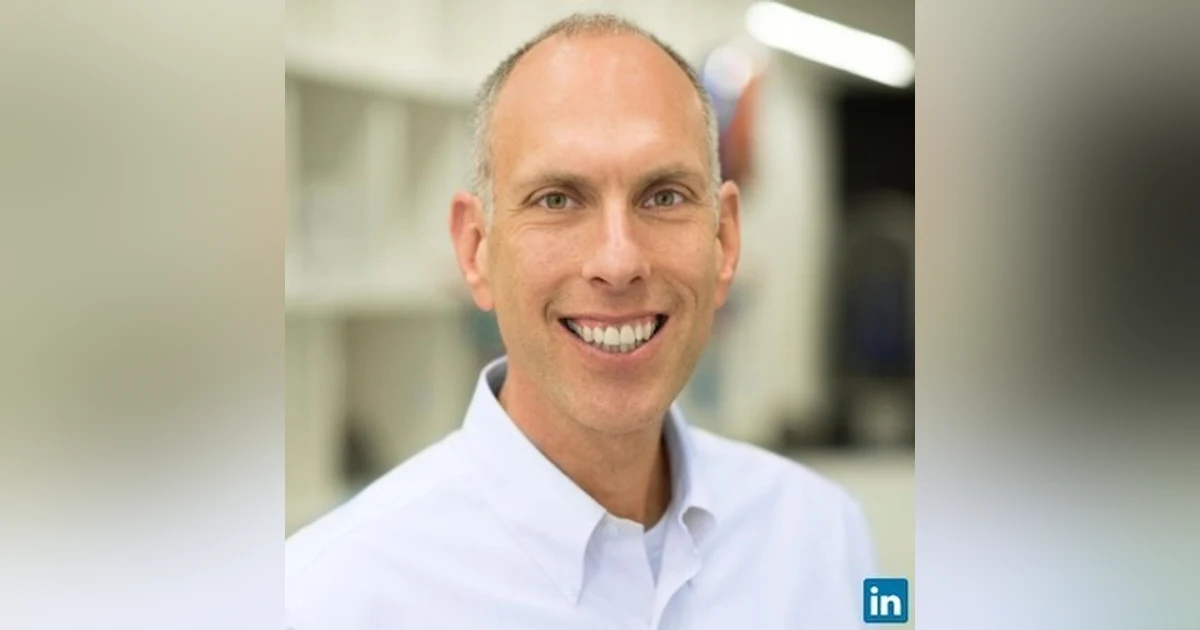
Russell Rothstein, CEO and founder of PeerSpot, joins Hot in Tech to explain how enterprise software buying has evolved and why trusted peer insights remain essential, even as AI transforms the decision-making process.
Russell discusses the complex committees behind enterprise purchases, the value of detailed, long-form reviews, and why buyers still rely on the real-world experience of their peers rather than AI-generated recommendations alone. He also shares how PeerSpot works with AWS Marketplace and Google Cloud Marketplace, how AI is changing review collection and content optimization, and what founders and technology professionals should focus on as the AI era accelerates.
speaker-0: Flip the switch. Hit connect. Turn it up.
speaker-1: And I'm David Leichner and this is Hot in Tech.
speaker-2: I'm Yetsy Tennenbaum. Conversations with people shaping what's next. Here we go.
speaker-1: Hello everyone and welcome to another exciting episode of Hot and Tech. With us today is Russell Rothstein, the founder and CEO of Peerspot, a leading B2B software review platform established in 2012. Under his leadership, and this guy's is incredible, Peerspot has served 22 million technology buyers and has influenced over $160 billion in enterprise. software spending. I'll stop there. That's enough. Russell, welcome to the show.
speaker-0: Thank you, David. It's great to be here.
speaker-2: So I I'm very familiar with PeerSpot, a â mutual friend of â David and I, Jeffrey was the one who introduced me to PeerSpot. And as a marketer, it was a great way for us to kind of show how we compare to competition based on real user reviews. So Russell, based â like PeerSpot kind of sits in the intersection between buyers and vendors and real world. Practitioner insights. What have you learned about how enterprise buying behavior has changed over the past decade since you established PeerSpot in twenty twelve?
speaker-0: Yeah, thanks Yitzy. So, you know, I'll actually start with the founding story for PureSpot and how we got the idea to start the company. Because it's really essential to how we look at the business in 2026. So â I was â meeting my now co-founder in New York. â We went out to dinner. We went to get some hummus and kebabs. and talking about business ideas, I'd flown into New York and, â I had been in the off enterprise software industry, my entire career and looking for some ideas for my next gig, my next startup that I was going to found. And, â I had, â chosen a hotel to stay at using TripAdvisor using reviews. And I had â chosen what restaurant to go to based on at that point is Yelp reviews today. I tend to use more Google reviews. â And then I put that next to what I did for my day job, which is to help people make, at least I was in the marketing side of enterprise software and realized there was no real place to go for reviews for customer peer insights. to get that non-vendor, non-biased perspective. And that was the founding. you know, we were sitting over dinner and said, listen, we've got so much information about what restaurant to go to, what hotel to stay at, but these software purchases that can make or break a career that are sometimes six-figures, sometimes seven-figure purchases that are so critical to the business, that can really make you a rock star in your job or... You know, or, or you, you know, you're not going to do what you need to do is to help choose the right software for your business. All these key decisions, there was not good, real, reliable peer content reviews out there to rely on. And that was the founding story for Peer Spot back in 2012, as you mentioned, David and Yassi. And so we, we launched Peer Spot and we're really proud of the fact that we built. platform that is the most reliable. We've all been focused on the highest quality reviews, in-depth reviews, no fake reviews, no AI generated reviews. the kind of content we really saw this as a true competitor alternative to Gartner, which has been the of the gold standard for people making decisions about what software to bend or to choose for their business. And that's been the principle that we started with in 2012. Now let's fast forward to 2026. A lot has changed. Obviously, SaaS market developed a lot and then now obviously AI is critically important in the software evaluation and AI evaluation process. But you know what hasn't changed? What hasn't changed is our fundamental thesis. The fundamental thesis is that there's still people making decisions about what software vendors to use. And the number one most influential source for them is what appear. Someone like them really thinks about the software. Now, yes, they're discovering that information through LLMs rather than maybe through Google searches or through surfing the web. The whole method of how they're doing their buying journey is changing rapidly, but the fundamentals have not changed at all. And so we've been continuing to be true to that initial beacon of why we started Peerspot, which is to be the number one most influential source for how people make buying decisions for B2B enterprise software.
speaker-1: Yeah, that's incredible. And â so for full disclosure, I spent a year at Gartner. So I I knew Gottner
speaker-0: I think that's how we met. I was doing some reconnaissance.
speaker-1: That could well be. I so I was a Gottner customer on and off from nineteen ninety-three. Now I'm really aging myself. â and then I went to the other side and I spent, like I mentioned, a year at Gottner. So I understand their business from both sides. And I can talk about absolutely nothing because â I'm signed off on an NDA for life, but I can tell you that. I really think there's something to be said for peer-to-peer credibility and and that the people who are putting in those reviews are people who have actually experienced the pains of implementations, the wonders of what the technology could do and what it really means for someone else who is going to be using, you know, whether it's software, hardware, whatever it is, that technology. So I think I think the peer to peer way is probably the most â honest. And â and and so yeah, I it's no surprise to me whatsoever that your company is doing well. â you know you you you've spent a lot of time in your career in product marketing and in management. And so from your perspective, you know what differentiates enterprise products that truly resonate with buyers from those â that struggle to gain Traction, you know, is is there one parameter or another that you've seen really sticking out or you know that that you can say is one of the main factors
speaker-0: Yeah. Well, we, we cover a variety of categories of products, you know, from cyber to IT, AI, data, and to, â non-technical products and traditional SaaS as well. â but if there's one theme, if you're talking about enterprise or mid-market enterprise software, â it's fundamentally different than buying SMB software. SMB software, â It's obviously that's that's a big market in itself, but it tends to be a small number of people involved in the buying decision. Often it's one person. It's one person. Often it's one person with a credit card who's making the decision about what software to buy. â and it tends to be much more point solution oriented. have a particular issue. I need to solve it. Is this, is this solving my pain point? Enterprise software, and as you get to be larger enterprises. the buying process becomes much more complex. So first of all, we're seeing buying committees and just to explain a buying committee is if you work for â an enterprise, a medium-sized or large-sized enterprise, for most purchases of let's say substantial significance, strategic kind of software for the business, â it's not usually one person's decision to make. There could be an executive sponsor. could be a leader of that, a budget holder, but there's usually a number of people in the organization who are involved in the decision. That's called the buying committee. Buying committee can include the, not just the business unit that's buying it, but also obviously IT, InfoSec, procurements, legal, â et cetera. So a lot of different constituents. so medium to large size enterprises tend to be â more, â conservative I'd say in, what they're, â trying to do because they each have to have a sort of minimum standard for each of those buying committee members, â to make sure that it doesn't violate their information security, it fits with their other software, et cetera. So it's not just, me the best tool that does this. It's much more than it just, what's the best tool that does that. It's really, it's a much more. a refined kind of answer to it. And it's a, it's a, so I'd say that that is the number one most substantial â difference when talking about enterprise software. And again, that's something that hasn't changed either. Actually, if you look at, I saw recent research that shows that number of members in a buying committee just continues to increase year over year. So it's something like in the high teens, the number of people. who are involved in the purchase of a software product. And so that's very different dynamics. And so in order to be successful, you ask which are the successful ones. The ones that are successful, are the ones that maybe don't have to excel at one particular thing, but have to check all the boxes. They have to check all the boxes. Because you can have the best widget, but if it doesn't include some type of information security standard that's requirement, It doesn't meet some type of, doesn't fit with the, integrate with the company CRM, whatever it is, it doesn't matter if it's the best sort of unit purpose tool for that purpose. So, so that's why at Peerspa, we decided when we built this platform to build long form in-depth reviews, because â as opposed to SMB software review. And there are plenty of SMB software review sites out there. That is sort of a Yelp like kind of review because someone's just looking for a quick hit. Okay. Which is the best, you know, CRM for small business, small dentist offices, something like that. But when you're talking about an enterprise level purchase, you need to get into a lot of different details of the product. What was the implementation like? What were the support like? â what were, â the, was the, what were the use cases because different enterprise will have different use cases for the same type of product in that category. â and obviously business case, they all have to buy to create a business case in order to justify funding for it again, as opposed to an SMB where it might just be someone who's just decided they're going to buy it and they have in their mind that it's worth it for them in a, in an enterprise. There's almost always a business case that has to be created. nor justify the investment there. And so just to be able to learn what are those business cases and the ROI that your peers have seen from that software. So that's why PeerSpot, what we've done is invested in very long form, in-depth reviews. Every review is really pretty much like a long form interview, average words is 600 words per review. So, â but have no fear, we have AI summaries of all the reviews. And you know, so you don't have to read, although there are people who will go through dozens of 600 word reviews and pick out things. â We also provide the technology to provide you with a summary and the highlights and excerpts of those content. â
speaker-1: I think if I'm gonna spend a million dollars on software, I'm gonna read through and take the time to make
speaker-0: Or you'll have someone from the team. The often we'll find, I mean, we see plenty of people visiting PeerSpot every day reading dozens of these long form reviews. And probably someone from the team was tasked to actually go through and go into the details of every single one of them.
speaker-1: I think that's probably
speaker-2: Yeah, I was thinking about my buying process of B2B software and it always starts with asking peers what they use, right? J just, hey, I need a video platform management system or I need an sales enablement tool. I d I I I've I don't think I've ever purchased a tool or went to a conference or did anything, spent a big chunk of money. For something that I know no one spoke about, I had no personal recommendation from a person â for, which I I guess really validates what you guys are doing. â and I I think that also connects to a lot yeah.
speaker-0: And I'll say, Yitzi, the key is what you say about peers or people like you. What does that mean? It doesn't mean a friend. It means someone who ideally works in the same industry as you. So if you're working in the tech industry and you want to buy â software, then you really care more about what someone else from the tech industry. says at the, at a similar size company, right? Because someone who was working in the banking industry, they have a completely different set of restrictions and regulation and, and considerations in their buying process. Then, then often someone in the tech industry and also company size. So if you're, you know, working at a company that's a hundred people or a thousand people, that's different than a company that's 10,000 or a hundred thousand people, which again, as the company size changes, also you've got special requirements as well.
speaker-1: I I'll tell you, I always thought that your model, right, is very much in line with how we used to buy everything years and years ago, which is still true today, which is word of mouth. And in my opinion, word of mouth, which is very much peer to peer reviews, is is worth a lot more than let's say getting advice from potentially some analysts who, you know, might or might not be â helping a company that has a subscription to you know their service.
speaker-0: I'll tell you a dirty secret, David. All those Gartner analysts, they go onto PeerSpot and read our reviews. We see them all the time. when you're consulting with an analyst firm, they're maybe having a few conversations with some in customers, but actually what they're doing is reading reviews often from PeerSpot. in order to form their opinion. you're just putting a middle man in the middle there.
speaker-2: So so Russell, you were talking about how AI influences buyer decisions and how it it evolved. It sounds like you say the genesis of the decision still comes from will now has evolved into coming from AI, but the end decision is very much still old time talking to friends, reading reviews, et cetera. I i did I get it right when you when you think about how AI influenced the buyer journey?
speaker-0: Yeah, human nature hasn't changed. It hasn't changed for hundreds of years. People still rely on the opinions of, like you said, peers more than anything else. â And, you know, here we are in June, 2026, where there actually is a bit of skepticism right now and blowback on AI right now, where â some of the hype â hasn't met expectations. Again, I'm... I'm bullish on AI, don't get me wrong, but there are what people are seeing in the market is sometimes they're still getting, whether it's hallucinated information or not accurate information or not exactly what they're expecting. And the promise of AI has been so high, exhibition is so high that there is â a healthy lump of â skepticism right now about AI generated. We even see that out there in the market as many businesses are giving mandates to their employees saying to not make decisions only based on AI. Absolutely use AI, but be careful about only using AI in your decision-making process. yes, so human nature hasn't changed. AI is a technology tool. It's our most powerful tool that we've had, certainly from an information perspective. â And so we're in a very dynamic, fluid market, but what hasn't changed is that people still rely on real, reliable human experts as their most trusted source.
speaker-1: So on that note, most of I'm not sure this is actually accurate, but you can correct me if I'm wrong. Most of your reviews are not gated and can be seen on your website. Is that is that â
speaker-0: Yeah, 100 % of our reviews. Well, whatever you do have to register in order to get some of our reports. So we do have some, some gating, but the individual reviews are all ungated and available for consumption. So you can go in, like I said, and read as many reviews, reviews of whatever you'd like to see, do comparisons. And there's no costs. And you don't even need to register for that, but we do provide some, some. We call it Buyers Guides and other â premium assets. And we do ask for you to register in order to consume those Buyers Guides.
speaker-1: So so then it would be correct to say that you have a definite advantage when it comes to the AI engines â that are going out there looking for information and they come across, for example, reports from analyst groups that are gated and you have to be a subscriber to actually get to them, whereby they can I seemingly they can get information off of PeerSpot without that you know, that the opening that front door with a very substantial â subscription fee. And and so I would I would imagine that a lot of the â the information that the AI engines are getting that they're then delivering back are coming from PierceFot and companies like yourself.
speaker-0: Yeah, that's right. mean, we've optimized our platform for LLMs in fact. So not just do we have an open door policy, we've optimized peerspot.com so that Jack GPT, Gemini, Claude, et cetera, perplexity. They love, mean, they're searching out trusted third-party content, especially because a lot of people use AI LLMs for doing their product. searches and comparisons. And we welcome that and we embrace that and that's why we perform so well. We're cited very highly in these LLMs when people do these searches.
speaker-1: I I I think that's great and I think all the vendors that are listening to in today should be â thinking very strongly about what you just heard because â when when your â reviews are going to be on Pierce Spot, you will be up there in the rankings on the AI engines when the people are going out looking for you.
speaker-0: Absolutely, buyers aren't going to the vendor websites very much these days. mean, they'll go in that once they've already made a decision, they'll go check out your website, but they're going to go either to an LLM or to a review site as part of their initial buying process. â The data used to be 80 % of the buying process happens online before it actually gets, before they visit your website. Now it's closer to 90 % of the buying process happens in those LLMs or in review sites before the buyer, potential buyer actually interacts with you on your website. So you've got to influence them at that. It's no longer top of funnel. â That's like almost the entire buyer's journey. You've got to be there. If you're not seen in the review sites, you're not seen in the LLMs. And again, the LLMs are mostly â citing the content from review sites. â You're invisible.
speaker-1: Wow. It sounds like your business has taken another dimension over the last couple of years, very much propelling you forward, which which you should be because you have a lot of good â information and of course good, you know, ear to ear reviews. So Russell, â you know, that that's a pretty incredible ride you've been on the last couple of years. So other things have happened as well. And you recently became the sole provider of first party reviews for the AWS marketplace and even more recently for Google marketplace. That's it, it's incredible. Why why do you think that giants like AWS and Google felt the need to bring in external verified peer reviews directly into their marketplace?
speaker-0: You know.
speaker-1: And what is that signal for the future of cloud marketplaces?
speaker-0: Yeah. So obviously, yeah, we've had two really big wins that we've announced in the past year with the AWS marketplace and with Google cloud marketplace. what we've, you know, what we've heard from them to straight is that they want to have high quality, reliable content on their platform. and we're, we're in a world where there's a lot of reviews and review sites with fake reviews out there. And AI has just made that compounded that issue where there's a lot of reviews out there on other review sites, â or out there on the web that are just AI generated. And both companies, AWS and Google are committed to having the best user experience. And part of having a great user experience is able to deliver them review content that they know is. in depth and trustworthy. And that's why they've chosen Peerspot.
speaker-1: I think it's also it â it definitely â is a symbol or let's say it shows the credibility of Peer Spot and it shows, you know, just how important it is in the market and even these giants â you know see that importance.
speaker-0: Yeah, absolutely.
speaker-1: You know, as we progress in twenty twenty six, we always ask our guests the same question on the show. So from your perspective as a founder, technology leader, you know, what do you see as truly hot in the high tech market going in you know, as we progress in twenty twenty six?
speaker-0: Well, there's three things that are hot in 2026. AI, AI and AI. those really, that's transformational. So yes, we talked a little bit about how AI impacts the buying process, how buyers are using AI. But I'm really passionate about our transformation here at PureSpot to be an AI first organization. And so we're making our company, our team, our people. AI first, AI centric. And you asked as a leader, â how do we address that? So I'm really proud of the fact that we've invested in our team, everyone on our team, â to support them in their own journey to become experts in AI. â And that doesn't mean giving them a Gemini, chat GPT, chat box, and telling them to just do what they want. â we've actually, tasked the team, â everyone to create their own AI apps. So, â and, not just, this is not just a dev team initiative. â this is something we're, we're helping everyone become builders. Okay. So in this new AI world, there's really two, â and I'm talking as, as for employees, right. If you're a worker. If you're trying to build your career, I'd say that there's two clear ways that you can stand out from the market, from others, from getting a job or getting a promotion or job. One is to be a great builder, build things and AI enables anyone now to build things. And two is to be a people person. Let's call it that way. which could be in sales, customer success, understanding customer needs, talking to users, but having a people interface. What that means is the prospects of, you're planning your job to be just sitting behind a computer all day and not building and not talking to users or customers, you're at risk from AI. You're at risk from AI. What we're doing here at PeerSpot is to help everyone become builders. â And so everyone's got a lovable account. We defaulted onto lovable. There are other platforms as well. chose lovable because it's more user friendly for a non-technical audience. And we've got people, our bookkeeper is building an app. â Our marketing team is built multiple apps. â IT department is built some incredible apps. HR is working on some really interesting AI apps that we will be, and not just, it's not a, some of these companies are doing these hackathons, you know, spend a day, spend a night and build something. We're building production apps that are being used either internally for production or externally for customer facing. And that's what they're building. And so we're helping our team, our employees, every peer spotter really become AI first and to take them into the AI, this new AI world, because it is a new AI world for knowledge workers.
speaker-1: Nice. Very nice. I think I think that's â the right way to go. â in â in the company I'm with â we also did we did workshops and we have weekly meetings to see how people are progressing. Also with â you know, just generally creating apps, creating skills, sharing those skills, making sure everybody â knows, you know, what's going on. But yeah, i any company that isn't doing that today, â I question whether they would they will exist in two years time. Maybe a year's time. It's â it's it's definitely a critical piece of technology going forward. And it's a it's a complete revolution, it's a complete transformation. I I don't even know what we want to call it. It's something so new and so different and you know, it's â yeah.
speaker-0: Yeah, well, David, for you and I who remember well the pre, so we remember the pre web days, let's say. â So we saw that that transformation back in the late nineties. â This is bigger than that clearly bigger than that.
speaker-1: â completely. And I'll age myself even further by saying that â there probably isn't somebody listening to the show who knows what a deck rainbow is, but I can tell you it was one of Digital Corp's earliest PCs and you don't probably don't remember who Digital Corp was, but you had to there were two floppy drives and the bottom floppy drive you actually had to turn over the disc in order to put it into the machine. It was that crazy. So yeah. We've seen tech evolve. It's been amazing. It's been amazing.
speaker-0: Yes, incredible.
speaker-2: People element is always the important piece that persists the technology.
speaker-0: Absolutely.
speaker-2: So Russell, for people who are starting out today as founders, operators, or professionals, AI is reshaping how products are discovered, evaluated, and built. What advice would you give them to help navigate the shift and position themselves for long term success? Yeah.
speaker-0: â well, you know, what you could say is to focus on AI skills. And I think that's, there's so much hype and, â information about that. I'm not gonna add to that. â so, but I will say is that if you're building something, you're entrepreneur, you, you, you, want to launch something or you want to take an initiative. â You've got to understand the needs of the customer. You've got to understand the needs of the customer and don't just go straight into the AI tool building something until you really understand what the pain point is, what the needs are. It's sort of traditional or classic product management â job to be done methodology. Clayton Christensen, still encourage it's still the best book in the market to learn about how build products that people need and use. And then the other factor is understanding who your customer is. â It's always been, okay, my building this for a business audience, a consumer audience, for a marketer, for a tech person. But today your customer might be a bot, might be AI and not a human. And that is relatively new in the market. So for you to think about, if you think really closely, who is your target customer? First of all, is it a human or is it an AI bot? Cause both have huge opportunities out there in the market. And then, like I said, if it's a human, what their persona needs are, and if it's a bot, then also â what you need to do in order to build something that will serve the needs of this new generation of AI agents and AI bots. that will need to consume your service.
speaker-1: So I wanna ask you one last question before we wrap up and and I think I know the answer you're gonna give me, but I'll I'll ask it anyway. So, you know, there's a lot of talk in the market that says that anybody with AI knowledge can copy or quickly put up a company that can compete with just about any company in the market today. It might take some cup some people longer, it might take some people less time. So you what prevents somebody from putting up a company like PeerSpot and you know and competing with you â based on you know the the peer to peer â model or maybe it would even be an AI to AI model where they would try to compete based on the information they can pull out, you know, and â and reuse that information.
speaker-0: Right. So the moat, one of your most valuable moats in today's business is your proprietary data, the data that you have that no one else has. So I guess someone could. take, index all of PureSpot's content and create website. We'd have to debate the legality of that, but one could do that. But we have a whole business operation that every day is bringing in new content. And so we always have the access to the most new fresh content out there in the market. I don't lose sleep. that someone's going to recreate PeerSpot because PeerSpot is not just about the existing content on the website. It's about every day the fact that we are collecting opinions from people in different industries across the world with our process to collect in-depth high quality reviews. So that is something that's â is very defensible in the market. It's the act, you know, it's our ability to collect content from real human beings and collecting content from AI is something that we've layered on top of that so that we have the ability to add this AI insights on top of the top of the human insights.
speaker-1: I I th I think one of the reasons why you will continue to succeed in the market, and I'm really bullish about you guys, is is the credibility that you've built up because you've been doing this for so long and pre AI and I think that that's something that many companies who have that domain expertise, the credibility, the know how. It's it's not something that AI can pick up even, you know, i i in a short period of time. There's the â intuition is what am I doing next? You know, it's it's â Shlomo Kramer, I was at an executive â meeting last night from Gartner. and Shlomo Kramer from â Cato Networks was there and he said something I actually really liked â about startups. He said that â pep one of the reasons that people create startups is because they want to be part of something that they're doing. together with other people to create something new. He said you don't want to spend your days and nights with you know hundreds of agents. You want to spend your days and nights with co-founders who are gonna beat you up, who are gonna be there when things don't work, who are gonna, you know and and and I think that â that's part of it also is, you know, that it's domain expertise, it's having the drive, the vision, and it's having companies like Amazon and Google Cloud say, hey We want you in your market in in our marketplace. You know, which to me is just like that's like the blow away of why you guys are are gonna keep succeeding into the future.
speaker-0: Thank you David.
speaker-1: Russell, it's been amazing having you on the show. And you know, I know you I know your company for a few years. I knew it back when it was â named a different name before you did the pivot into Pierce Spot, which is quite similar but you know, but â still the the br the rebranding, everything that you've done all over the way. Yeah, it's been it's been pretty amazing. And I wish you guys a lot of continued success.
speaker-0: Thank you so much, David. Really appreciate it. Great conversation. And I look forward to the next opportunity.
speaker-2: If you enjoyed this episode, make sure to subscribe so you don't miss future conversations with the people building, breaking, and reshaping technology.
speaker-1: And this podcast is proudly sponsored by C2A Security, the only context based product security orchestration platform. Stay tuned for lots more hot in tech flip.
speaker-0: the switch hit connect turn up hot in tech
speaker-1: Made up Two Be too much noise.
speaker-0: Real it's just a headline Skip the spin, we dive straight in. Future in your ears this time. Hot in tech. â you drops another wild start a change in how we move how we pay Tiny chip in your hand, on your wrist Tomorrow starts here today â Heart in tech Turn it up What's coming next? From the labs to your desk Yeah, we're breaking all the spells Heart in tech Thick as ears, bone beds Love in your set Heart in tech What's new?
speaker-1: Now, what's next? Where big dreams? Lean back, let your mind command. Three words, one track.
speaker-0: edge of the hit play you Hard in tech Yeah Yes